I still remember the first time I tried to make sourdough bread. It was a Tuesday in November, the kind of gray, damp evening that makes you want to huddle under a blanket with a takeout menu. I had a jar of starter bubbling on my counter, fed and ready, and I thought, “How hard can it be? It’s just flour, water, and time.”
Thirty-six hours later, I had a dense, brick-like disc that could have served as a doorstop. I tasted it. It tasted like regret and wet cardboard. I nearly threw my starter out the window. But I didn’t. I kept feeding it. I kept failing. And slowly, painfully, I learned that bread isn’t about precision; it’s about patience and paying attention.
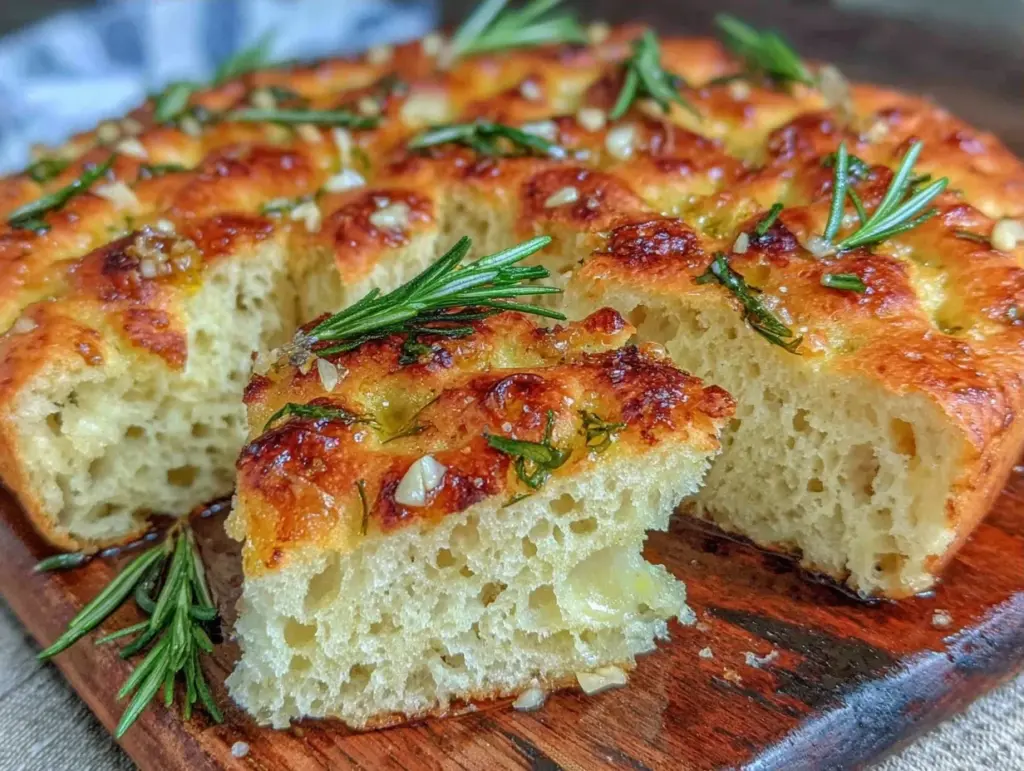
Fast forward to last weekend. I was hosting a small dinner for friends who think “complex flavors” means adding too much salt. I wanted to impress them without stressing over a complicated main course. I decided to try my hand at Beginner Sourdough Focaccia with Garlic and Rosemary. This time, I didn’t fight the dough. I listened to it. And when I pulled that golden, dimpled, herb-crusted masterpiece out of the oven, the smell filled the house like a warm hug.
My friends tore into it before it even cooled. One of them, who usually sticks to crusty French bread, asked for the recipe immediately. “This is better than the bakery down the street,” she said, crumbs falling on her shirt. I smiled. It was. Because this Beginner Sourdough Focaccia with Garlic and Rosemary isn’t just bread. It’s comfort. It’s fuel that keeps you going without feeling like diet food. It’s the kind of loaf that makes you feel like a culinary wizard, even if you’ve never kneaded a day in your life.
I’ve made this specific version at least ten times since that first disastrous brick attempt. I’ve tweaked the hydration, played with the rosemary-to-garlic ratio, and figured out exactly how to get those signature dimples without collapsing the structure. If you have a sourdough starter (even if it’s been sitting in the fridge for a week), you can make this. Seriously. Let’s get into why this loaf is about to become your new obsession.
Why You’ll Love This Garlic Rosemary Focaccia
There are a million reasons to bake bread, but this one checks every box for me. It’s not just about the taste, though that’s pretty high on the list. It’s about the process, the texture, and the sheer joy of tearing into something you made with your own hands.
It Forgives Mistakes — Unlike baguettes or ciabatta, focaccia is a high-hydration dough that is incredibly forgiving. If you over-proof it slightly, it just gets airier. If you under-proof it, it’s chewier. I’ve made this loaf with starters that were barely active, and it still rose beautifully. The oil in the pan saves everything.
Garlic and Rosemary Are Magic — You might think garlic bread is basic, but infused olive oil and fresh rosemary change the game. The garlic roasts in the oil, becoming sweet and nutty, while the rosemary releases its piney aroma into every nook and cranny. It’s aromatic without being overwhelming.
It Fuels Your Day — This isn’t just empty carbs. The sourdough fermentation breaks down the gluten and phytic acid, making the nutrients in the flour more bioavailable. Plus, the healthy fats from the olive oil keep you satiated. It’s a complex carbohydrate that provides steady energy, perfect for breakfast with eggs or lunch with soup. It fuels your day without feeling like diet food.
Minimal Active Time — You’ll spend maybe 20 minutes actually working with the dough. The rest is hands-off rising time. You can prep this on Sunday night and bake it Monday morning, or prep it while your kids do homework and bake it later. It fits into real life.
Restaurant-Quality Texture — Crispy, salty edges. A soft, airy, chewy interior. That contrast is what keeps you coming back. I’ve tried buying focaccia from fancy bakeries, and half the time it’s dry or overly dense. This homemade version? It’s perfect every single time.
This is my go-to when I want to feel accomplished but not exhausted. It’s the Beginner Sourdough Focaccia with Garlic and Rosemary that will win over even the most skeptical bread-bakers.
Key Ingredients for Perfect Focaccia
Let’s talk about what goes into this loaf. I keep it simple because complexity is the enemy of consistency. Here’s exactly what you need, and why each ingredient matters.
Bread Flour (500g / 4 cups) — I use King Arthur Bread Flour because it has a higher protein content (around 12-13%). This gives the dough the strength to hold those big air bubbles. All-purpose flour works in a pinch, but the texture will be slightly less chewy. Don’t skimp on the protein here.
Active Sourdough Starter (100g / ½ cup) — This needs to be bubbly and active. If you haven’t fed it in 24 hours, give it a quick feed and wait until it doubles in size. A sluggish starter means sluggish bread. I usually feed mine 4-6 hours before baking. It should pass the float test: drop a teaspoon in a glass of water, and if it floats, it’s ready.
Warm Water (350g / 1½ cups) — Not hot! Just warm to the touch, like baby bottle milk. Too hot will kill your yeast; too cold will slow down the fermentation. This hydration level (70%) is the sweet spot for beginners. It’s wet enough to create an open crumb but manageable enough to handle.
Extra Virgin Olive Oil (60ml / ¼ cup + extra for pan) — This is non-negotiable. You need good quality EVOO. The oil in the dough adds richness and tenderness, and the oil in the pan creates that crispy, golden crust. I use a robust Italian oil for the topping and a milder one for the dough if I’m being fancy, but honestly, any good EVOO works.
Fine Sea Salt (10g / 1¾ tsp) — Salt controls the yeast and strengthens the gluten. I use fine sea salt because it dissolves quickly. Kosher salt works too, but you’ll need to adjust the volume since it’s flakier. Don’t skip the salt; bland focaccia is sad focaccia.
Fresh Rosemary (2 tbsp, chopped) — Fresh is best. Dried rosemary is too dusty and loses its potency. I pick sprigs from my garden or buy fresh bunches from the store. Chop them roughly; you want little bursts of flavor, not giant needles.
Garlic (4 cloves, minced) — Fresh garlic, minced fine. I like to mix half of it into the oil for the pan and half on top for visible flavor. Avoid jarred garlic; it has a metallic aftertaste that ruins the delicate sourdough flavor.
Tools Needed for Success
You don’t need fancy equipment. Here’s what I use, and what you can substitute.
9×13 Inch Baking Pan — I use a heavy-duty aluminum pan. It conducts heat evenly and gives me those crispy edges. Glass pans work but take longer to brown. Avoid dark non-stick pans if you can; they can burn the bottom before the top is done. If you only have an 8×8 pan, halve the recipe.
Stand Mixer or Hand Mixer — Optional but helpful. I use my stand mixer with the dough hook for the first 10 minutes to develop gluten, then finish by hand. If you’re kneading by hand, be prepared for a 15-minute arm workout.
Spatula — A flexible silicone spatula is your best friend here. You’ll use it to fold the dough and spread the olive oil. It makes handling the sticky dough much easier than trying to use your hands immediately.
Cling Wrap or Damp Towel — To cover the dough during rising. Plastic wrap works well, but I prefer a damp kitchen towel because it’s reusable and breathable.
Oven Thermometer — I know, it sounds geeky, but oven temperatures lie. An $8 thermometer ensures your oven is actually at 425°F (220°C). Inconsistent heat is the #1 reason baked goods fail.
How to Make Beginner Sourdough Focaccia with Garlic and Rosemary
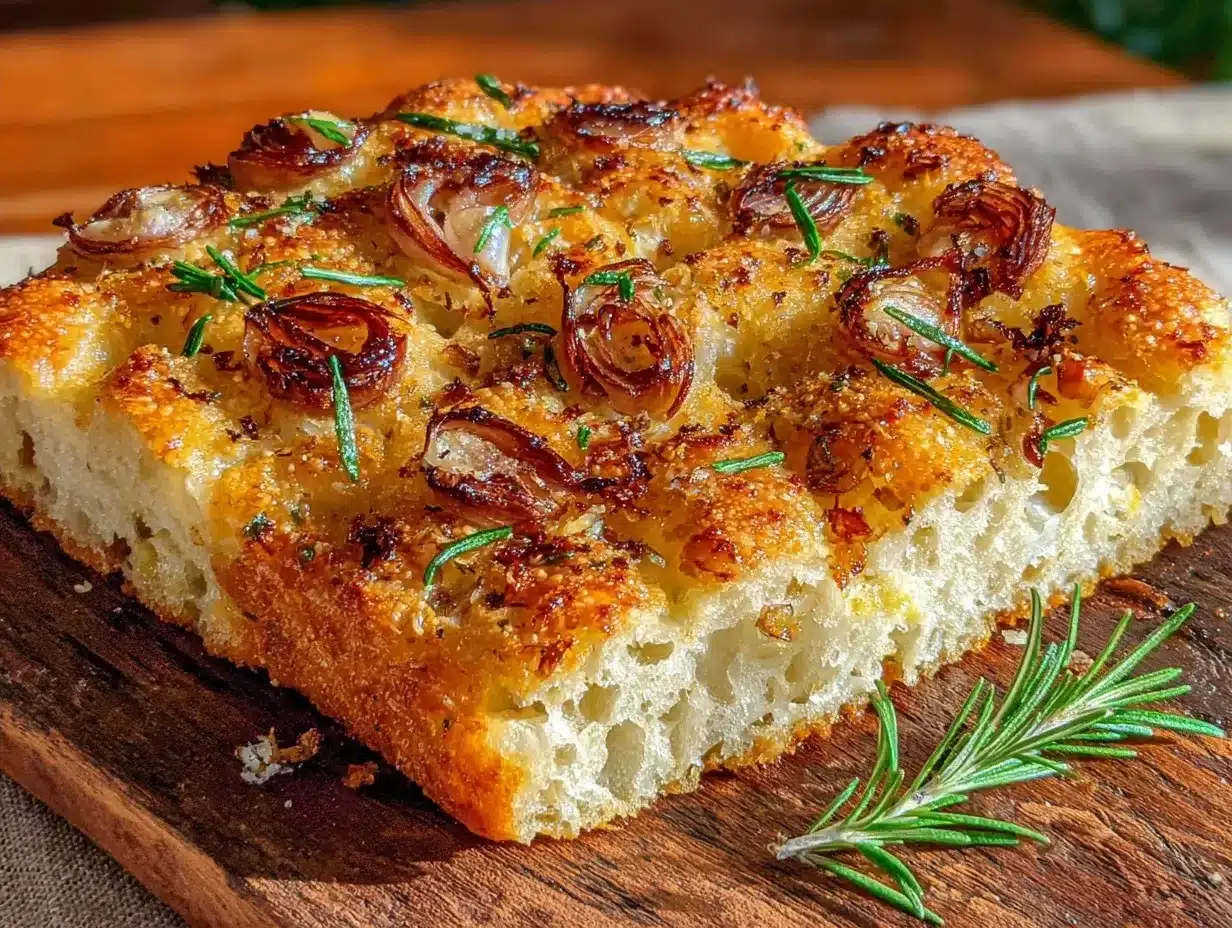
Ready to bake? Here’s the step-by-step. I’ve broken it down so you know exactly what to expect at each stage.
Step 1: Mix the Dough (10 minutes)
In the bowl of your stand mixer, combine the bread flour, warm water, and active sourdough starter. Mix on low speed with the dough hook for 2 minutes until a shaggy dough forms. Add the salt and olive oil. Increase speed to medium-low and mix for 8-10 minutes. The dough should be smooth, elastic, and slightly sticky. It should pull away from the sides of the bowl but still cling to the hook.
Pro Tip: If you’re mixing by hand, just stir until combined, then let it rest for 30 minutes (autolyse). After resting, knead for 10-15 minutes. The resting period relaxes the gluten, making kneading much easier.
Step 2: Bulk Fermentation (4-6 hours)
Lightly oil a clean bowl. Transfer the dough to it and cover with plastic wrap or a damp towel. Let it rise at room temperature (around 70-75°F / 21-24°C) for 4-6 hours. During this time, perform “stretch and folds” every 30 minutes for the first 2 hours. Wet your hands, grab one side of the dough, stretch it up, and fold it over the center. Rotate the bowl and repeat 4 times. This builds strength without kneading.
What to watch for: The dough should double in size, become bubbly, and jiggle like Jell-O when you shake the bowl. If it’s not doubling, it might be too cold. Move it to a warmer spot.
Step 3: Prep the Pan and Shape (10 minutes)
Preheat your oven to 425°F (220°C). Generously oil your 9×13 inch pan with olive oil. You want a good pool of oil in the corners; this creates the crispy crust. Pour the dough into the pan. It will be sticky. Wet your hands again and gently press the dough into the corners. Use your fingertips to dimple the surface as you go. Don’t worry about making it look pretty; just get it to the edges.
Let it rest in the pan for 15 minutes. This relaxes the gluten so it won’t shrink back when you add toppings.
Step 4: Add Toppings and Final Rise (1-2 hours)
Mix the minced garlic and chopped rosemary with 2 tablespoons of olive oil. Drizzle this mixture over the dough. Use your fingertips to press the herbs and garlic into the dimples. Sprinkle flaky sea salt over the top.
Let the focaccia rise again, uncovered, for 1-2 hours. It should look puffy and fill the pan. If your kitchen is cool, this might take longer. Trust the puff, not the clock.
Step 5: Bake (25-30 minutes)
Slide the pan into the preheated oven. Bake for 25-30 minutes. Rotate the pan halfway through for even browning. The focaccia is done when it’s deep golden brown on top and the bottom sounds hollow when you tap it. If you’re worried about burning, cover it loosely with foil for the last 10 minutes.
Total Time: About 6-8 hours from start to finish, but only 30-40 minutes of active work.
Expert Tips from My Focaccia Failures
Here’s everything I learned from making this too many times. Save this section; you’ll need it.
Don’t Rush the Rise — This is the #1 mistake. If the dough isn’t puffy and bubbly before you bake it, it will be dense. Sourdough needs time. If it’s not ready, let it go longer. A slow rise develops better flavor and texture.
Use Plenty of Oil — I know, it sounds unhealthy, but the oil doesn’t soak in; it fries the bottom. Use enough oil so that when you tilt the pan, you see a shimmer across the entire surface. Your focaccia will be crispier than any bakery version.
Handle with Wet Hands — Sourdough dough is sticky. Wetting your hands prevents sticking and keeps the dough from tearing. It’s a game-changer for shaping.
Let It Cool (Sort Of) — Focaccia is best eaten warm, but let it cool in the pan for at least 10 minutes. This allows the structure to set. If you lift it out immediately, it might fall apart.
Recipe Variations to Mix It Up
Once you’ve nailed the basic version, here’s how to mix it up. The base recipe is a blank canvas.
Tomato and Mozzarella Focaccia — Add cherry tomatoes (halved) and fresh mozzarella pearls before baking. The tomatoes burst and create a sweet, savory sauce. Bake until cheese is melted and bubbly.
Sausage and Fennel Focaccia — Crumble cooked Italian sausage over the dough before the final rise. Add fennel seeds with the rosemary. This is perfect for breakfast sandwiches.
Green Olive and Sun-Dried Tomato — Slice Kalamata olives and chop sun-dried tomatoes. Press them into the dough. The briny olives cut through the richness of the oil beautifully.
Gluten-Free Option — Use a 1:1 gluten-free flour blend with xanthan gum. The dough will be stickier, so handle with extra care. Add an extra egg to help bind it.
Serving and Storage
Serving: Tear it into rustic chunks. Serve warm with a side of smoked queso dip for dipping, or alongside a simple green salad. It pairs wonderfully with slow cooker beef and mushroom stroganoff for a hearty meal.
Storage: Store leftovers in an airtight container at room temperature for up to 2 days. The oil keeps it moist. Reheat in a toaster oven or skillet for 2-3 minutes to crisp up the edges. It does not freeze well because the texture becomes gummy upon thawing. Honestly, it rarely lasts long enough to freeze anyway.
Nutrition Information
I’m not a nutritionist, but here’s the breakdown per slice (assuming 12 slices).
| Nutrient | Amount |
|---|---|
| Calories | 280 |
| Protein | 6g |
| Carbs | 32g |
| Fiber | 2g |
| Fat | 14g |
| Sodium | 350mg |
My Take: This is comfort food with olive oil and cheese. It’s not a diet food. But it’s better than takeout and I know what’s in it. The sourdough fermentation makes it easier to digest, and the olive oil provides healthy fats. It’s fuel that keeps you going without feeling like diet food.
Final Thoughts
Making Beginner Sourdough Focaccia with Garlic and Rosemary is less about baking and more about connecting with the process. It slows you down. It makes your kitchen smell incredible. And the result? A loaf that’s crispy, chewy, and utterly delicious.
If you make this, drop a comment! I love hearing how it turns out in your kitchen. Did you add extra garlic? Did you use a different herb? Share your variations. And if you need more inspiration for your baking adventures, check out my fluffy ricotta lemon pancakes for a sweet weekend treat.
Happy cooking!
Frequently Asked Questions
Can I use all-purpose flour instead of bread flour?
Yes, you can, but the texture will be slightly less chewy. Bread flour has higher protein, which creates stronger gluten strands and that signature focaccia chew. If you use all-purpose, your focaccia will be more tender, almost like a cake-bread hybrid. It’s still delicious, just different.
My starter is in the fridge. Can I still make this?
Absolutely. Take your starter out the night before, feed it, and let it come to room temperature. By morning, it should be active. If it’s not quite doubling, just give it a little more time. Sourdough is flexible. If you’re in a huge rush, you can use 1 teaspoon of active dry yeast instead, but the flavor won’t be as complex.
Why did my focaccia turn out dense?
This usually happens if the dough didn’t rise enough during the bulk fermentation or final proof. Sourdough needs time. Check your kitchen temperature; if it’s cold, the yeast works slower. Also, make sure your starter was active and bubbly before you added it. A dead starter = flat bread.
Can I make this ahead of time?
Yes! After the bulk fermentation, you can punch down the dough, put it in the oiled pan, cover it tightly, and refrigerate it for up to 24 hours. When you’re ready to bake, take it out, let it come to room temperature and rise (this might take 2-3 hours), then add toppings and bake. This is great for meal prep.
What kind of salt should I use?
For the dough, fine sea salt is best because it dissolves easily. For the topping, flaky sea salt (like Maldon) adds a nice crunch and visual appeal. If you only have kosher salt, use about 1.5 times the volume of fine salt.
Can I add cheese?
Definitely. Parmesan, pecorino, or mozzarella all work well. Add hard cheeses before baking and soft cheeses in the last 5 minutes so they melt but don’t burn.
Pin This Recipe!
Beginner Sourdough Focaccia: Easy Garlic Rosemary Recipe
- Total Time: 6-8 hours
- Yield: 12 servings 1x
Description
A forgiving, high-hydration sourdough focaccia infused with roasted garlic and fresh rosemary. This recipe yields a crispy, golden crust with a soft, airy interior, perfect for beginners.
Ingredients
- 500g (4 cups) Bread Flour
- 100g (½ cup) Active Sourdough Starter
- 350g (1½ cups) Warm Water
- 60ml (¼ cup) Extra Virgin Olive Oil (plus extra for pan)
- 10g (1¾ tsp) Fine Sea Salt
- 2 tbsp Fresh Rosemary, chopped
- 4 cloves Garlic, minced
Instructions
- In a stand mixer bowl, combine bread flour, warm water, and sourdough starter. Mix on low speed with a dough hook for 2 minutes until a shaggy dough forms.
- Add salt and olive oil. Increase speed to medium-low and mix for 8-10 minutes until the dough is smooth, elastic, and slightly sticky.
- Lightly oil a clean bowl, transfer the dough to it, and cover with plastic wrap or a damp towel.
- Let the dough rise at room temperature (70-75°F) for 4-6 hours. Perform stretch and folds every 30 minutes for the first 2 hours.
- Preheat oven to 425°F (220°C). Generously oil a 9×13 inch baking pan.
- Pour the dough into the pan. Wet your hands and gently press the dough into the corners. Use fingertips to dimple the surface.
- Let the dough rest in the pan for 15 minutes.
- Mix minced garlic and chopped rosemary with 2 tablespoons of olive oil. Drizzle over the dough and press herbs into the dimples. Sprinkle with flaky sea salt.
- Let the focaccia rise again, uncovered, for 1-2 hours until puffy.
- Bake for 25-30 minutes, rotating the pan halfway through, until deep golden brown and the bottom sounds hollow when tapped.
Notes
Ensure your sourdough starter is active and passes the float test. Use plenty of olive oil in the pan for a crispy crust. Handle the sticky dough with wet hands to prevent tearing. If your kitchen is cool, allow extra time for rising.
- Prep Time: 30 minutes
- Cook Time: 30 minutes
- Category: Side Dish
- Cuisine: Italian
Nutrition
- Serving Size: 1 slice
- Calories: 280
- Sugar: 1
- Sodium: 350
- Fat: 14
- Saturated Fat: 2
- Carbohydrates: 32
- Fiber: 2
- Protein: 6
Keywords: sourdough, focaccia, garlic rosemary bread, beginner baking, artisan bread, homemade focaccia


