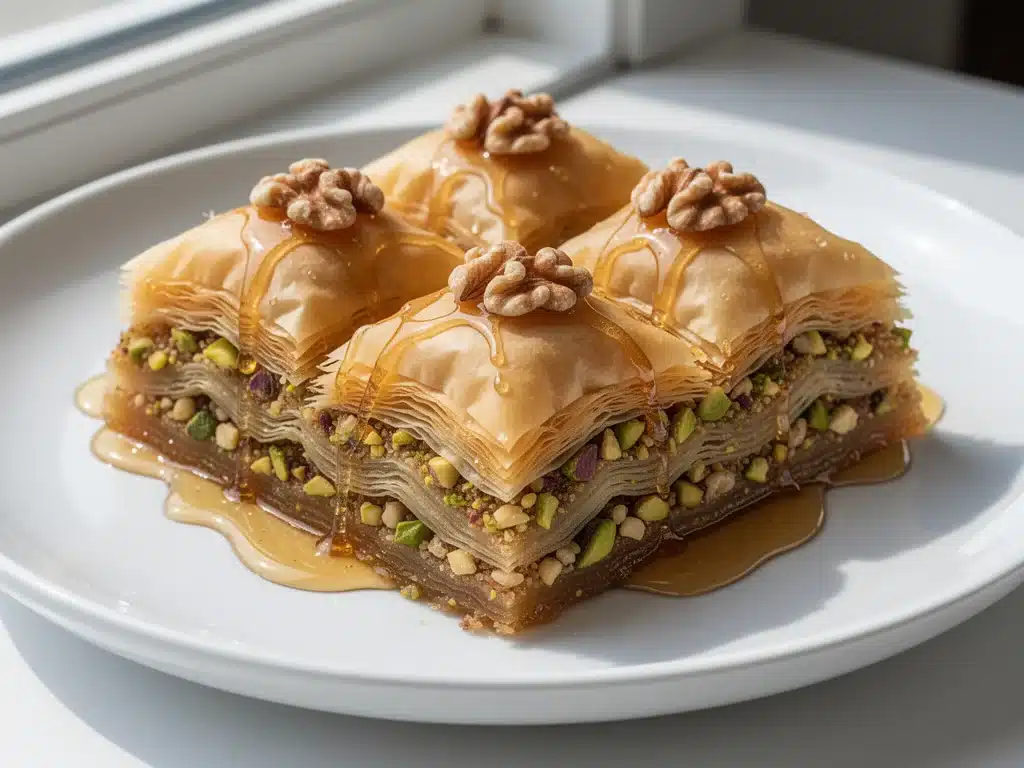
I still remember the first time I successfully made baklava. It was three years ago, during a chaotic holiday season, and I was determined to impress my partner’s family, who trace their roots back to Istanbul. I had watched a dozen YouTube tutorials, convinced myself that layering paper-thin sheets of dough was within my capabilities, and bought a box of phyllo from the frozen aisle. I was wrong about the “paper-thin” part—it was more like “fragile tissue paper that disintegrates if you look at it wrong”—and I was definitely wrong about my skills.
By the time I got to the eighth layer, I had a tear in the dough, a sticky mess on my counter, and a profound sense of defeat. I scraped it all into a bowl, mixed it with nuts and syrup, and called it “baklava-style crumble.” To my surprise, it was delicious. But it wasn’t baklava. It was a sad imitation.
That failure haunted me. I told myself I’d never try again. But last month, while cleaning out my pantry, I found a half-used jar of honey and a bag of pistachios that were begging to be used. I decided to give it one more shot. This time, I slowed down. I learned the tricks. I stopped fighting the phyllo and started working with it.
What came out of the oven wasn’t just good—it was incredible. Crisp, flaky, golden layers that shattered when you bit into them, soaking up a honey syrup that tasted like pure sunshine. My partner’s family loved it. The next week, I made it for my book club. Then for a dinner party. Now, this Classic Homemade Baklava with Honey Syrup is my go-to dessert for every occasion. It’s not just a recipe; it’s a confidence builder. And I’m going to walk you through exactly how to make it without the stress.
I’ve tested this method at least ten times, tweaking the syrup ratio and the buttering technique until it was foolproof. You don’t need to be a professional pastry chef. You just need patience and the right approach. This baklava recipe is the best easy phyllo recipe I’ve ever found because it demystifies the process. It turns a intimidating, labor-intensive dessert into something you can actually enjoy making.
Why You’ll Love This Recipe
There are a lot of reasons to keep this Classic Homemade Baklava with Honey Syrup in your rotation, but let’s be real—it’s mostly about that first bite. Here’s why this specific version wins every time:
- Crunch That Actually Lasts — The biggest complaint about homemade baklava is that it gets soggy within hours. Not this one. The secret is brushing every single layer with butter (not oil) and baking it low and slow. I’ve left slices on the counter for two days, and they stayed crisp. Trust me on this.
- Not Overly Sweet — Store-bought baklava is often a sugar bomb. This version uses a honey-lemon syrup that’s balanced. It’s sweet, yes, but the lemon cuts through the richness of the butter and nuts. It’s sophisticated, not cloying.
- Impressive but Approachable — You can serve this to food critics, and they’ll be impressed. But the technique is simple: layer, brush, repeat. I’ve made this while talking on the phone with my mom. It’s meditative, not stressful.
- Freezer-Friendly — I make a double batch every time. One half goes into the freezer unbaked. When guests drop by unexpectedly, I thaw it and bake it. It tastes just as good as fresh. This is my secret weapon for last-minute entertaining.
- Customizable Nuts — While I love pistachios, you can use walnuts, pecans, or a mix. I sometimes add a pinch of cardamom to the nuts for a floral note. It’s your canvas.
This recipe has saved me more times than I can count. It’s the perfect dessert for holidays, weddings, or just because you want something special on a Tuesday. It’s the kind of dessert that makes people ask, “Did you buy this?” And you get to smile and say, “Nope. Made it myself.”
Ingredients You’ll Need
Here’s the best part: the ingredient list is short. You don’t need a trip to a specialty store for most of this. I’m particular about three things, though, and I’ll tell you why.
For the Phyllo Layers
Phyllo dough (1 package / 16-20 oz) — Do not buy the cheap, brittle kind from the back of the freezer. Look for a brand like Pepperidge Farm or a local Middle Eastern market. Thaw it in the fridge overnight. If it’s still frozen in the center, it will crack. Patience pays off.
Unsalted butter (1 cup / 226g, melted) — I use real butter. Margarine or oil won’t give you that rich, golden crunch. Melt it completely and let it cool slightly so you can brush it on easily. Don’t skip this step—every layer needs butter.
For the Nut Filling
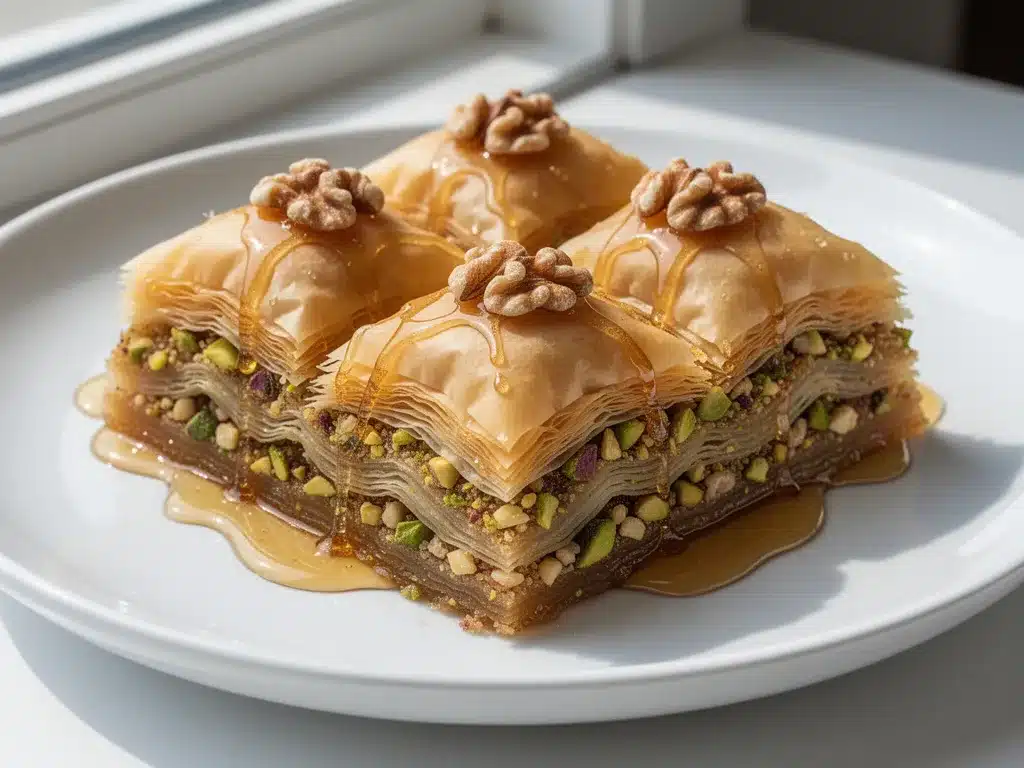
Pistachios (1 ½ cups / 170g, finely chopped) — I buy raw, unsalted pistachios and chop them myself. Pre-chopped nuts often have dust that makes the filling sandy. If you can’t find pistachios, walnuts are a classic alternative. Pecans work too, but they’re sweeter.
Granulated sugar (2 tablespoons) — Just a little bit to bind the nuts and add a touch of sweetness to the layers.
Cinnamon (1 teaspoon) — Ground cinnamon adds warmth. Don’t use too much, or it’ll overpower the nuts.
For the Honey Syrup
Water (1 cup / 240ml) — Standard tap water is fine.
Granulated sugar (1 cup / 200g) — This creates the base sweetness.
Honey (½ cup / 170g) — Use a good quality honey. Clover or orange blossom honey adds a floral note that elevates the whole dish. Avoid overly strong honeys like buckwheat.
Lemon juice (2 tablespoons) — Freshly squeezed. This is crucial. It cuts the sweetness and adds brightness. Bottled juice tastes flat.
Lemon zest (1 teaspoon) — From one lemon. Adds aroma.
Vanilla extract (1 teaspoon) — Pure vanilla, not imitation. It adds depth.
Optional: Rose water (1 teaspoon) — If you want that authentic Middle Eastern aroma, add this. It’s potent, so start with half a teaspoon and taste.
Equipment Needed
You don’t need fancy gadgets. Here’s what I actually use:
- 9×13 inch baking dish — Glass or ceramic works best. I use a Pyrex dish because I can see the bottom browning.
- Pastry brush — Silicone brushes are easier to clean than bristle brushes. Get a good one; you’ll use it for every layer.
- Food processor — For chopping the nuts evenly. If you don’t have one, use a sharp knife and chop until they’re fine but not a paste.
- Saucepan — Medium-sized for making the syrup. Stainless steel is easiest to clean.
- Sharp knife or pizza cutter — For cutting the baklava before baking. A sharp knife prevents the phyllo from shifting.
Pro tip: Have a small bowl of water nearby to wet your fingers if the phyllo starts to dry out. It’s a lifesaver.
How to Make It: Step-by-Step
Alright, let’s make this! I’m walking you through exactly how I do it, including the little tricks I’ve picked up.
Step 1: Make the Syrup First (10 minutes)
This is the #1 rule of baklava: make the syrup before you bake the pastry. Why? Because you pour the cold syrup over the hot baklava, and that temperature shock creates the crunch. In a saucepan, combine water, sugar, honey, lemon juice, lemon zest, and vanilla. Bring to a boil over medium heat, then reduce to low and simmer for 10 minutes. It will thicken slightly. Remove from heat and let it cool completely. If you’re feeling fancy, add the rose water now.
Step 2: Prep the Oven and Pan (5 minutes)
Preheat your oven to 350°F (175°C). Grease your 9×13 inch baking dish with a little butter. This prevents sticking and adds flavor.
Step 3: Unroll the Phyllo (5 minutes)
Take your phyllo dough out of the fridge. Let it sit at room temperature for 30 minutes while you prep the nuts and syrup. This makes it pliable. Unroll it carefully. Keep the unused sheets covered with a damp towel to prevent drying. Phyllo dries out faster than you think.
Step 4: Layer the Base (10 minutes)
Place one sheet of phyllo in the pan. Brush it lightly but thoroughly with melted butter. Add another sheet. Brush again. Repeat this for 8 sheets. You’re building the foundation. Press them down gently with your hands to remove air pockets.
Step 5: Add the Nut Filling (5 minutes)
In a bowl, mix the chopped pistachios, sugar, and cinnamon. Sprinkle this evenly over the 8 buttered sheets. Press it down lightly so it sticks. This is your flavor center.
Step 6: Layer the Top (10 minutes)
Continue layering the remaining phyllo sheets, brushing each one with butter. You want about 8-10 sheets on top. The last sheet should be brushed generously. The goal is a golden, crispy lid.
Step 7: Cut Before Baking (5 minutes)
This is critical. Cut the baklava into diamonds or squares *before* baking. If you wait until after, the phyllo will shatter. Use a sharp knife. Cut all the way through to the bottom. I do a grid pattern: first lengthwise, then widthwise, then diagonally. This ensures even cooking and easy serving.
Step 8: Bake (45-50 minutes)
Bake in the preheated oven for 45-50 minutes. The top should be deep golden brown, not pale. If it’s browning too fast, cover loosely with foil. The smell will fill your house. It’s amazing.
Step 9: Pour the Syrup (2 minutes)
Remove the baklava from the oven. Immediately pour the cool syrup over the hot baklava. It will sizzle—that’s the sound of success. The syrup will soak into the cuts. Let it sit for at least 1 hour, preferably 2-4 hours, before serving. This allows the layers to soften slightly but stay crisp.
Expert Tips & Tricks
Here’s everything I’ve learned from making this dozens of times. These tips will save you from my mistakes.
- Keep Phyllo Covered — Phyllo dries out in minutes. Keep the unused sheets under a damp kitchen towel. If it cracks, patch it with a small piece of dough and butter. It’ll bake fine.
- Butter, Don’t Brush Too Hard — You want a thin, even layer of butter. Too much, and it gets greasy. Too little, and it’s dry. Use a light hand.
- Cut Before Baking — I cannot stress this enough. Cutting after baking is a disaster waiting to happen. The phyllo is brittle when hot. Cut while it’s warm, right out of the oven, but before pouring syrup.
- Syrup Temperature — Cold syrup, hot baklava. This contrast is non-negotiable for the right texture. If your syrup is warm, the baklava will become soggy mush.
- Patience with Cooling — It’s tempting to dig in right away. Resist. The baklava needs time to absorb the syrup and set. At least 1 hour, but 4 hours is better.
Variations & Substitutions
Once you’ve nailed the basic version, here’s how you can mix it up. I’ve tried all of these.
- Walnut Baklava — Swap pistachios for walnuts. This is the traditional Turkish style. Add a pinch of nutmeg to the walnuts.
- Pecan Baklava — Southern style. Use pecans and add a tablespoon of bourbon to the syrup for a grown-up twist.
- Mixed Nut Baklava — Combine pistachios, walnuts, and almonds. This is what I do when I want extra luxury.
- Cardamom Baklava — Add 1 teaspoon of ground cardamom to the nut mixture. It’s aromatic and sophisticated.
- Gluten-Free — Use gluten-free phyllo dough. It’s available in the freezer section. It can be trickier to work with, so keep it covered.
Serving & Storage
How to Serve: I usually serve this at room temperature. It’s best with a cup of strong black tea or Turkish coffee. The bitterness of the tea balances the sweetness of the baklava perfectly. I also serve it with a dollop of Greek yogurt or a scoop of vanilla ice cream for those who want extra richness.
Storage: Store baklava in an airtight container at room temperature for up to 1 week. It actually improves after 2-3 days as the flavors meld. Do not refrigerate—it will make the phyllo soft and lose its crunch.
Freezing: You can freeze unbaked baklava for up to 3 months. Wrap the pan tightly in plastic wrap and foil. When ready to bake, thaw in the fridge overnight, then bake as directed. You can also freeze baked baklava, but the texture may change slightly. Wrap tightly in plastic and foil.
Nutrition Information
I’m not a nutritionist, but here’s the breakdown if you’re tracking. This is a rich dessert, so portions are small.
Per Serving (based on 16 pieces):
- Calories: 280
- Protein: 4g
- Carbs: 32g
- Fiber: 2g
- Sugar: 22g
- Fat: 15g
- Saturated Fat: 6g
Look, this is comfort food with butter and honey. It’s not a diet recipe. But it’s way better than store-bought, and you know exactly what’s in it. When I want to make it lighter, I use fewer phyllo layers and more nuts. But usually? I just enjoy a small square and savor it.
Final Thoughts
So that’s my go-to Classic Homemade Baklava with Honey Syrup! I’ve probably talked your ear off at this point, but when you make a recipe this often, you have a lot to say about it.
This has saved holiday dinners more times than I can count. It’s my answer to “what’s for dessert” when I want to impress but don’t want to order takeout. My family is happy, my guests are happy, and I’m happy because I’m not stressed about cooking.
Make it yours! Try different nuts, add spices, adjust the syrup. The best recipes are the ones you adapt to your family’s tastes. If you make this, drop a comment and let me know what you think! I love hearing how recipes turn out in your kitchen.
Happy baking! And I hope your kitchen smells half as good as mine does right now.
Frequently Asked Questions
Q: Can I use oil instead of butter?
A: You can, but the flavor and texture won’t be the same. Butter gives baklava its rich, golden color and flaky crunch. Oil makes it heavier and less flavorful. If you must use oil, use a neutral oil like grapeseed, but I recommend butter.
Q: Why is my baklava soggy?
A: Usually, this happens if the syrup was too warm when poured, or if the baklava wasn’t baked long enough. Make sure the syrup is cool and the baklava is deep golden brown. Also, ensure you’re not using too much butter between layers.
Q: Can I make this ahead?
A: Absolutely. In fact, it’s better made ahead. Make it 1-2 days in advance. Store in an airtight container at room temperature. The flavors will meld and improve.
Q: Why did my phyllo crack?
A: Phyllo cracks when it’s too dry or too cold. Make sure it’s thawed properly in the fridge overnight and brought to room temperature before using. Keep it covered with a damp towel while you work.
Q: Can I freeze baklava?
A: Yes, but it’s best frozen unbaked. Wrap tightly in plastic and foil. Thaw in the fridge, then bake. Baked baklava can be frozen, but the texture may suffer.
Q: What kind of honey should I use?
A: Use a mild, floral honey like clover or orange blossom. Strong honeys like buckwheat or manuka can overpower the delicate flavor of the phyllo and nuts.
Pin This Recipe!
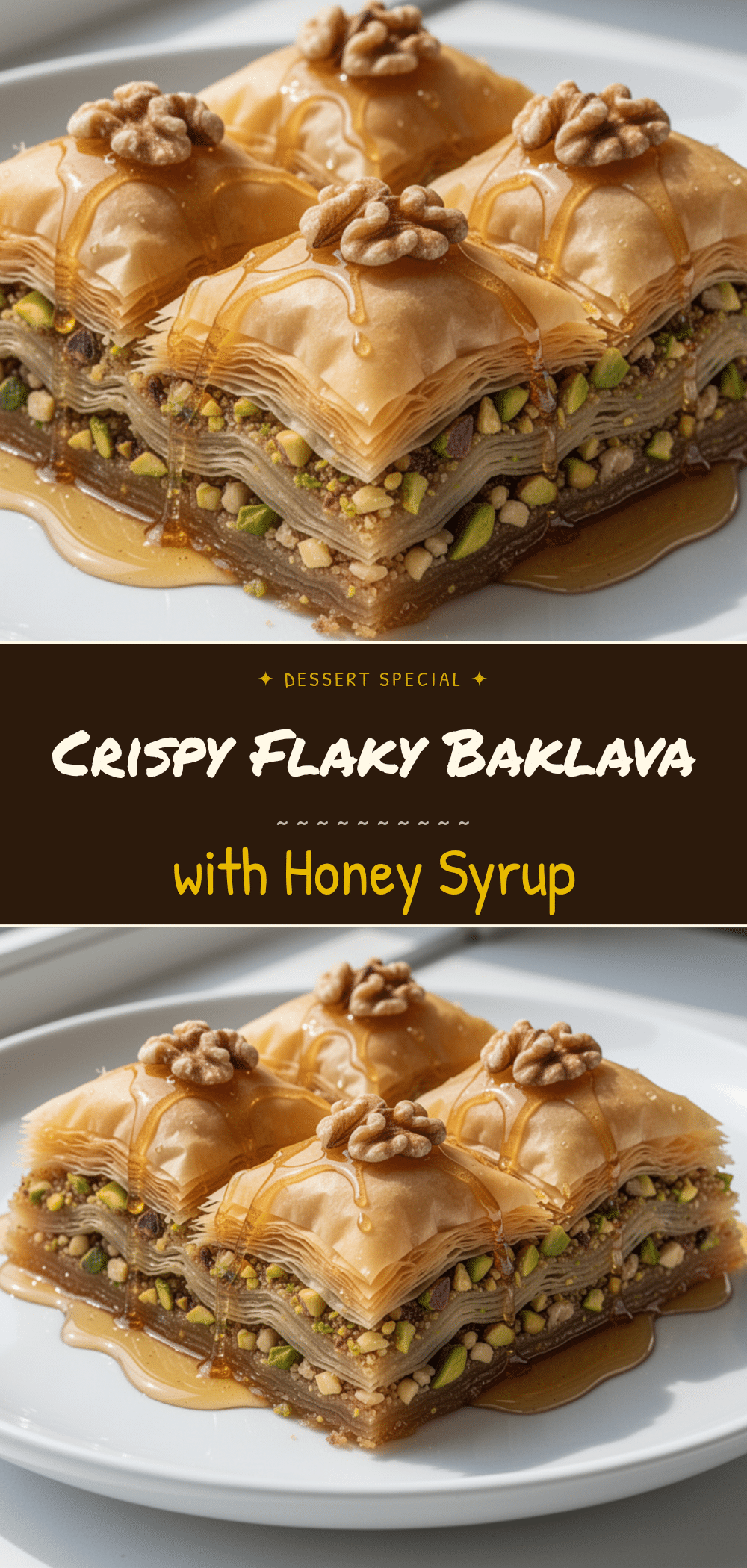
Classic Homemade Baklava with Honey Syrup
- Total Time: 1 hour 35 minutes
- Yield: 16 servings 1x
Description
A foolproof, crispy, and flaky baklava recipe that demystifies phyllo dough. This version features a balanced honey-lemon syrup and buttery layers that stay crisp for days.
Ingredients
- 1 package (16-20 oz) phyllo dough, thawed in fridge overnight
- 1 cup (226g) unsalted butter, melted and slightly cooled
- 1 ½ cups (170g) raw unsalted pistachios, finely chopped
- 2 tablespoons granulated sugar (for nuts)
- 1 teaspoon ground cinnamon
- 1 cup water
- 1 cup (200g) granulated sugar (for syrup)
- ½ cup (170g) good quality honey (clover or orange blossom)
- 2 tablespoons fresh lemon juice
- 1 teaspoon lemon zest
- 1 teaspoon pure vanilla extract
- 1 teaspoon rose water (optional)
Instructions
- Make the syrup: In a saucepan, combine water, 1 cup sugar, honey, lemon juice, lemon zest, and vanilla. Bring to a boil over medium heat, then reduce to low and simmer for 10 minutes. Remove from heat and let cool completely. Add rose water if using.
- Preheat oven to 350°F (175°C) and grease a 9×13 inch baking dish with butter.
- Let phyllo dough sit at room temperature for 30 minutes. Keep unused sheets covered with a damp towel.
- Layer the base: Place one sheet of phyllo in the pan and brush with melted butter. Repeat for 8 sheets total, pressing down gently to remove air pockets.
- Add filling: Mix chopped pistachios, 2 tablespoons sugar, and cinnamon. Sprinkle evenly over the 8 buttered sheets and press lightly.
- Layer the top: Continue layering remaining phyllo sheets, brushing each with butter. Use about 8-10 sheets on top, ensuring the last sheet is brushed generously.
- Cut before baking: Using a sharp knife, cut the baklava into diamonds or squares all the way through to the bottom. Create a grid pattern (lengthwise, widthwise, then diagonally).
- Bake for 45-50 minutes until the top is deep golden brown. Cover loosely with foil if browning too fast.
- Pour the cool syrup immediately over the hot baklava. It will sizzle.
- Let sit for at least 1 hour, preferably 2-4 hours, before serving to allow syrup absorption.
Notes
Keep phyllo covered with a damp towel to prevent drying. Cut baklava before baking to prevent shattering. Ensure syrup is cool and baklava is hot when combining for maximum crunch. Store at room temperature in an airtight container for up to 1 week. Do not refrigerate.
- Prep Time: 45 minutes
- Cook Time: 50 minutes
- Category: Dessert
- Cuisine: Middle Eastern
Nutrition
- Serving Size: 1 piece
- Calories: 280
- Sugar: 22
- Fat: 15
- Saturated Fat: 6
- Carbohydrates: 32
- Fiber: 2
- Protein: 4
Keywords: baklava, phyllo dough, honey syrup, pistachio dessert, homemade baklava, easy phyllo recipe, middle eastern dessert


