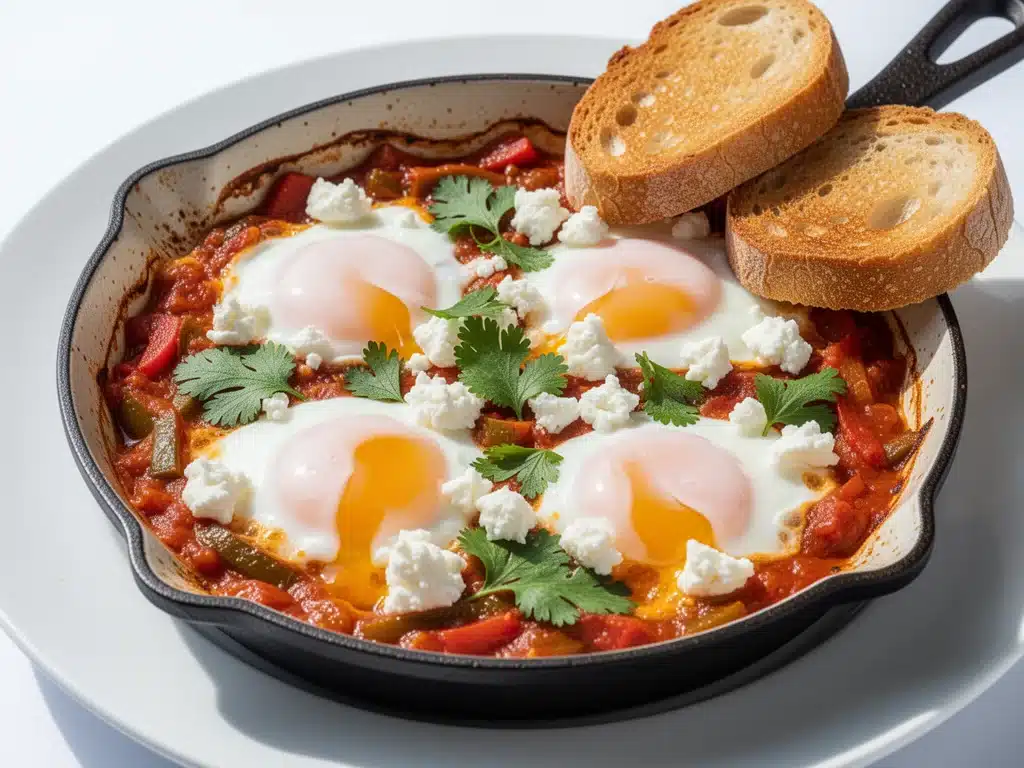
Last Tuesday, I was staring into the fridge at 6:45 PM with that familiar panic setting in. You know the one. It’s 6:45 PM, you’re starving, you have exactly twenty minutes before the kids demand dinner, and the only things inside are a half-empty jar of marinara, a sad-looking bell pepper, and a block of feta that’s been sitting there since Sunday. I was about to order takeout. Again. But then I remembered a shakshuka recipe I’d bookmarked months ago, promising myself I’d try it when I had time. Spoiler alert: I never have time.
So I improvised. I grabbed what I had, threw it in a skillet, and cracked four eggs into the bubbling sauce. I didn’t have time to chop fresh herbs, so I used dried oregano. I didn’t have time to toast spices, so I dumped them in straight from the jar. And you know what? It was incredible. The eggs poached perfectly in the rich tomato sauce, the feta melted into salty, creamy pockets, and the whole thing smelled like a Mediterranean vacation rather than a rushed Tuesday night.
This Classic Shakshuka with Feta and Herbs has since become my go-to weeknight dinner. It’s not just because it’s fast—it’s because it feels like a real meal, not a compromise. It’s vibrant, it’s flavorful, and it’s genuinely foolproof. I’ve made this at least a dozen times since that lucky Tuesday, tweaking the spice levels and experimenting with different herbs, until I landed on this version that consistently impresses my family. If you’re tired of the same old chicken and rice rotation, this skillet dish is your answer.
Why You’ll Love This Shakshuka Recipe
There are about ten reasons I keep coming back to this shakshuka, but here are the big ones that actually matter when you’re trying to get dinner on the table.
Stupid Simple — Seriously, if you can sauté an onion and crack an egg, you can make this. There’s no fancy technique here. No tempering chocolate, no kneading dough. Just one skillet and a handful of ingredients. I’ve walked my teenage son through it over FaceTime while I was at work, and he nailed it.
Lightning Fast — 25 minutes from start to finish, and only 10 of those are active cooking. I make this on weeknights when I get home at 7pm, exhausted and hungry. The sauce simmers while you chop, and the eggs cook while you set the table. It’s the definition of low-effort, high-reward.
Pantry-Friendly — You probably have 80% of these ingredients already. Canned tomatoes? Check. Eggs? Check. Spices? Check. The only thing you might need to grab is fresh feta and some herbs, but even those are cheap and easy to find at any grocery store.
Crowd-Pleaser — I’ve served this to my vegetarian sister, my meat-loving husband, and my picky 8-year-old (who surprisingly loved it). Everyone finds something to love here. It’s adaptable enough to be a main dish or a fancy brunch.
Makes Amazing Leftovers — Okay, real talk: shakshuka is best fresh. But if you do have leftovers (which is rare in my house), the flavors meld together beautifully the next day. The sauce thickens, the eggs soak up more flavor, and it’s still delicious reheated.
Budget-Smart — Feeds 4 people for under $12. That’s less than a single pizza delivery. I love that I can make a restaurant-quality meal at home for a fraction of the cost.
This is my go-to when I need dinner to just work. No complicated techniques, no weird ingredients, just reliable, delicious food that makes everyone happy. And honestly? It feels fancy enough for guests but casual enough for a Tuesday.
Ingredients You’ll Need
Here’s the best part: you probably have most of this already. This Classic Shakshuka with Feta and Herbs relies on simple, high-quality ingredients that do all the heavy lifting. I’m particular about three things here, and I’ll tell you exactly why.
For the Sauce Base
Olive oil (2 tablespoons / 30ml) — Use good quality extra virgin olive oil here. It’s the base of the flavor, so don’t cheap out. I keep a nice bottle in my pantry specifically for dishes like this.
Yellow onion (1 medium, diced / about 200g) — Sweet onions work too, but yellow gives better depth. White onions are too sharp for this. Dice it small so it melts into the sauce.
Red bell pepper (1 large, diced / about 250g) — Adds sweetness and color. I prefer red because it’s sweeter than green, but yellow or orange works too. Don’t skip this—it adds body to the sauce.
Garlic (4 cloves, minced / about 2 tablespoons) — Yes, four cloves. Don’t skimp. Fresh only—no jarred garlic in this recipe. It changes the flavor profile completely.
Crushed tomatoes (28 ounces / 794g can) — I use San Marzano crushed tomatoes if I can find them. They’re sweeter and less acidic than regular canned tomatoes. If you can’t find crushed, use whole peeled tomatoes and pulse them in a blender or crush them by hand.
Tomato paste (2 tablespoons / 30g) — This adds depth and richness. It’s the secret ingredient that makes the sauce taste like it simmered for hours, not 20 minutes.
For the Flavor
Cumin (1 teaspoon) — Earthy and warm. This is the backbone of shakshuka flavor. Use ground cumin, not whole seeds.
Paprika (1 teaspoon, preferably smoked) — Smoked paprika adds a subtle smokiness that mimics traditional cooking methods. Regular paprika works too, but smoked is better.
Cayenne pepper (¼ teaspoon, optional) — For a little heat. Adjust based on your spice tolerance. I use less for the kids and more for myself.
Salt and black pepper — To taste. I usually start with 1 teaspoon salt and ½ teaspoon pepper, then adjust at the end.
For the Eggs and Toppings
Large eggs (4-6 large) — Fresh eggs matter here because you’re cooking them whole. Room temperature eggs cook more evenly, but cold eggs work fine too. Crack them directly into the sauce.
Feta cheese (½ cup / 70g, crumbled) — This is the star topping. Salty, tangy, and creamy. I use Greek feta because it’s tangier and holds its shape better. Don’t use pre-crumbled feta if you can avoid it—it’s often dusty and dry.
Fresh herbs (2 tablespoons, chopped) — Parsley is traditional, but cilantro or dill work too. Parsley adds freshness, cilantro adds brightness, dill adds a unique twist. I usually use parsley for the classic flavor.
Freshly squeezed lemon juice (1 tablespoon) — A squeeze of lemon right before serving brightens everything up. It cuts through the richness of the eggs and cheese.
Bread for dipping — crusty sourdough, pita, or baguette. Essential. You’ll want to soak up every bit of that sauce.
Personal Tips
- Brand recommendations: I always use Muir Glen organic crushed tomatoes—they’re consistent and flavorful.
- Shopping shortcuts: If you’re being lazy, use jarred minced garlic. It’s not as good, but it’s convenient. Just use half the amount because it’s stronger.
- Substitutions: No feta? Use goat cheese or halloumi. Halloumi doesn’t melt as much but adds a nice chew.
- Storage: Feta keeps for weeks in the fridge if submerged in its brine. Don’t throw that brine away!
Equipment Needed
You don’t need fancy equipment for this. Here’s what I actually use.
12-inch skillet or Dutch oven — I use a 12-inch cast iron skillet. It needs to be wide enough to hold all the eggs in a single layer. If your skillet is too small, you’ll have to crowd the eggs, and they won’t cook evenly. My cast iron is well-seasoned and makes cleanup easy.
Wooden spoon — For stirring the sauce. Silicone works too. Don’t use metal on non-stick if you’re using a non-stick skillet.
Sharp knife — For chopping onions and peppers. Dull knives make you cry more—learned this the hard way.
Cutting board — Any size works. I use plastic for easier cleanup.
Measuring spoons — Pretty standard stuff. Dollar store versions work fine.
Small bowl — For cracking eggs into before adding to the skillet. This prevents shell fragments and makes it easier to control where each egg lands.
Optional but nice:
- Microplane — For grating garlic instead of mincing. Saves time and gives a finer texture.
- Spatula — For serving. A wide spatula helps scoop out eggs with sauce.
Tool Tips:
- Don’t have a cast iron skillet? Any heavy-bottomed skillet works—stainless steel or enameled cast iron. Just make sure it’s wide enough.
- I’m obsessed with my small bowls — I keep a stack of ramekins by the stove for cracking eggs. It makes the process so much smoother.
How to Make It: Step-by-Step
Alright, let’s make this! I’m walking you through exactly how I do it, including the little tricks I’ve picked up.
Step 1: Prep Your Ingredients (5 minutes)
Before you start cooking, chop your onion, dice the bell pepper, and mince your garlic. I know it seems fussy, but it makes the actual cooking way less stressful. Crumble your feta and chop your herbs while you’re at it. Once you start cooking, things move fast.
Step 2: Sauté the Aromatics (5 minutes)
Heat olive oil in your 12-inch skillet over medium heat. Add the diced onion and red bell pepper. Cook for 3-4 minutes until they start to soften and smell sweet. Add the minced garlic, cumin, paprika, and cayenne. Cook for 1 minute, stirring constantly. The spices should smell fragrant and amazing. Don’t let the garlic burn—it turns bitter quickly.
Step 3: Build the Sauce (5 minutes)
Pour in the crushed tomatoes and tomato paste. Stir well to combine. Season with 1 teaspoon salt and ½ teaspoon black pepper. Bring the sauce to a gentle simmer, then reduce heat to low. Let it simmer uncovered for 5-7 minutes, stirring occasionally. The sauce should thicken slightly and darken in color. This step develops the flavor—don’t skip it.
Step 4: Add the Eggs (5 minutes)
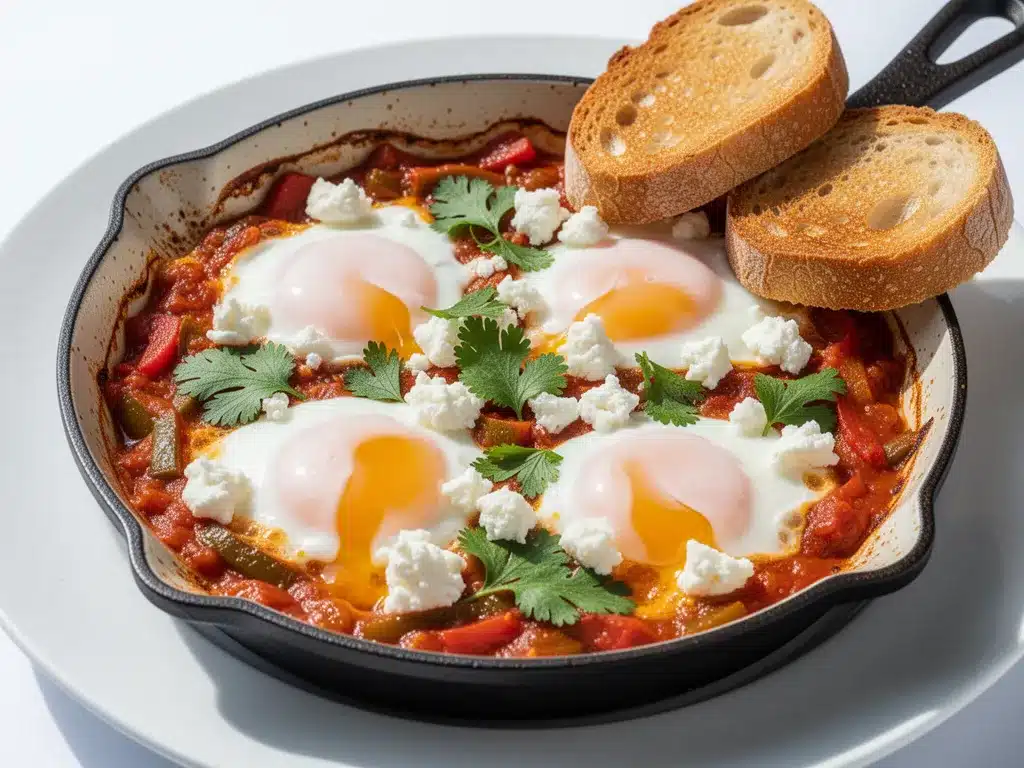
Using a spoon, make four small wells in the sauce. Crack an egg into each well. (Alternatively, crack eggs into a small bowl first, then gently slide them into the sauce.) The eggs should be nestled in the sauce, not floating on top. Sprinkle the crumbled feta over the eggs and around the edges of the skillet.
Step 5: Cook Until Set (5-7 minutes)
Cover the skillet with a lid. Let the eggs cook for 5-7 minutes, depending on how runny you like your yolks. Check at 5 minutes. The whites should be set, and the yolks should still be slightly jiggly. If you want firmer yolks, cook for another 2 minutes. Remove from heat.
Step 6: Finish and Serve
Uncover and sprinkle with fresh herbs and a squeeze of lemon juice. Serve immediately with crusty bread for dipping. The residual heat will continue to cook the eggs slightly, so pull them when they’re just shy of perfect.
Total Time: About 25 minutes (10 minutes active, 15 minutes mostly hands-off)
Built-in Troubleshooting:
- Sauce too thin? Simmer longer. The sauce should coat the back of a spoon.
- Eggs overcooked? Remove from heat earlier. They continue cooking off the heat.
- Sauce burning? Lower the heat immediately. Stir frequently to prevent sticking.
Expert Tips & Tricks
Here’s everything I’ve learned from making this dozens of times. These tips will save you from my mistakes.
Use a Wide Skillet
This is the #1 tip. The skillet needs to be wide enough to hold all the eggs in a single layer. If you crowd them, they steam instead of poach, and the whites get rubbery. I learned this the hard way with a small skillet and sad, overcooked eggs. Now I use my 12-inch cast iron every time.
Don’t Skip the Tomato Paste
It might seem like an unnecessary ingredient, but it adds depth and richness. It’s what makes the sauce taste complex rather than just like canned tomatoes. I’ve tried skipping it, and the sauce just isn’t the same.
Room Temperature Eggs Help
Cold eggs can shock the sauce and slow down cooking. If you have time, take your eggs out of the fridge 15 minutes before cooking. If you forget, don’t worry—just crack them into a bowl first and let them sit for a minute.
Low and Slow for the Sauce
Let the sauce simmer gently. High heat can make the tomatoes break and become oily. Low heat allows the flavors to meld and the sauce to thicken naturally.
Common Mistakes (and how to avoid them):
- Mistake: Sauce is too watery Fix: Simmer longer. Or add a tablespoon of tomato paste to thicken it.
- Mistake: Eggs are overcooked Fix: Remove from heat when yolks are still slightly jiggly. They’ll continue cooking off the heat.
- Mistake: Sauce is bland Fix: Taste and adjust salt and acid. A squeeze of lemon juice can brighten it up instantly.
Pro Tricks I’ve Learned:
- For Restaurant-Quality Finish Drizzle with a little extra olive oil and fresh herbs before serving. It adds gloss and freshness.
- For Extra Flavor Toast the spices in the oil for 30 seconds before adding tomatoes. Releases more flavor.
- For Better Texture Use crushed tomatoes, not diced. They break down better and create a smoother sauce.
Variations & Substitutions
Once you’ve nailed the basic version, here’s how you can mix it up. I’ve tried all of these.
Tested Variations
Spicy Shakshuka
Add 1 teaspoon red pepper flakes and a diced jalapeño with the onions. For extra heat, serve with hot sauce on the side. My husband prefers this version—he loves a kick.
Veggie-Loaded
Toss in 1 cup chopped spinach or kale in the last 2 minutes of simmering the sauce. The greens wilt right in. This is how I get my kids to eat vegetables without noticing.
Mediterranean Style
Add ½ cup Kalamata olives and ¼ cup chopped sun-dried tomatoes to the sauce. Adds a briny, intense flavor. This is my favorite variation for entertaining.
Breakfast Shakshuka
Serve with a side of avocado slices and everything bagel seasoning. It’s like a fancy brunch dish but just as easy. I make this on weekends when I have more time to sit and enjoy it.
Dietary Modifications
Vegan
Replace eggs with firm tofu cubes. Press the tofu, cube it, and bake it at 400°F for 20 minutes until crispy, then add to the sauce. Or use chickpeas for a protein-packed version. My vegan friend requests this version often.
Gluten-Free
Everything is naturally gluten-free except the bread. Serve with gluten-free crusty bread or rice. I use Schar gluten-free bread—it’s surprisingly good.
Lower-Carb
Serve over cauliflower rice or zucchini noodles. It’s not the same texture, but it works if you’re watching carbs. I make this when I’m trying to be “healthy,” though it’s not really a diet food.
Different Proteins
- Chicken sausage (sliced and browned first) — Adds smokiness and protein.
- Ground lamb (brown first, then add spices) — Makes it heartier and more traditional.
- Shrimp (add in last 3 minutes) — Cooks quickly and adds a seafood twist.
Serving & Storage
How to Serve:
I usually serve this straight from the skillet at the dinner table—it looks rustic and stays warm. But here are other ways I’ve enjoyed it:
Side Dishes:
- Crusty sourdough bread (obviously)
- Simple green salad with lemon vinaigrette
- Roasted vegetables (broccoli, zucchini, or asparagus)
- Cucumber-tomato salad with feta
Toppings Bar:
When I have guests, I put out: extra feta, red pepper flakes, fresh herbs, lemon wedges, and hot sauce. Everyone customizes their bowl.
Wine Pairing:
Not a wine expert, but my wine-snob friend says a crisp Sauvignon Blanc or a light Pinot Noir works great with this. It’s light enough for white and complex enough for red.
Storage Instructions:
Refrigerator: Store in an airtight container for up to 3 days. The sauce will thicken in the fridge—totally normal.
Reheating: Best method: Add to a skillet with a splash of water or broth over low heat. Stir gently until heated through. Microwave method: Heat in 30-second intervals, stirring between. Add a splash of water if it’s too thick. Never works: Trying to reheat in the pot you cooked it in. It always burns on the bottom. Ask me how I know.
Freezing: Honestly, this doesn’t freeze well because of the eggs. The texture changes when thawed. Make it fresh or store in the fridge for up to 3 days.
Meal Prep: Make the sauce on Sunday, store in the fridge. Cook eggs fresh each night. Takes 5 minutes and tastes way better than fully reheated shakshuka.
Nutrition Information
I’m not a nutritionist, but here’s the breakdown if you’re tracking.
Per Serving (based on 4 servings):
- Calories: 280
- Protein: 14g
- Carbs: 12g
- Fiber: 3g
- Sugar: 7g
- Fat: 18g
- Saturated Fat: 8g
- Cholesterol: 210mg
- Sodium: 650mg
- Calcium: 200mg
What’s Good:
- Decent protein from eggs and feta
- Calcium from the cheese
- Can add vegetables to boost nutrition
- More filling than it looks
What to Know:
- Higher in calories from cheese and olive oil
- Contains dairy and gluten (if served with bread)
- Moderate sodium (use low-sodium tomatoes to reduce)
My Take:
Look, this is comfort food with eggs and cheese. It’s not a diet recipe. But it’s way better than takeout, costs less, and I know exactly what’s in it. When I want to make it lighter, I use less feta and load up on vegetables. But usually? I just eat a reasonable portion and enjoy it.
Final Thoughts
So that’s my go-to Classic Shakshuka with Feta and Herbs! I’ve probably talked your ear off at this point, but when you make a recipe this often, you have a lot to say about it.
This has saved weeknight dinners more times than I can count. It’s my answer to “what’s for dinner” when I’m tired, don’t want takeout, and still want something that tastes really good. My kids are happy, my husband’s happy, and I’m happy because I’m not stressed about cooking.
Make it yours! Try different add-ins, swap in your favorite vegetables, adjust the spice level. The best recipes are the ones you adapt to your family’s tastes. If you’re looking for more easy weeknight ideas, you might also enjoy my fluffy ricotta lemon pancakes for a weekend brunch, or my slow cooker beef and mushroom stroganoff for a cozy winter night.
If you make this, drop a comment and let me know what you think! I love hearing how recipes turn out in your kitchen. And if something doesn’t work, tell me that too—I’m here to help troubleshoot.
Happy cooking! And I hope your kitchen smells half as good as mine does right now.
Frequently Asked Questions
Can I use whole tomatoes instead of crushed tomatoes?
Yes! Just pulse them in a blender or crush them by hand before adding to the skillet. Whole peeled tomatoes work great, but make sure they’re crushed enough to create a sauce-like consistency. I prefer crushed because it’s easier, but whole tomatoes add a nice texture if you like chunks.
Why did my eggs turn out rubbery?
They were probably overcooked. Eggs continue to cook off the heat, so remove the skillet from the burner when the whites are just set and the yolks are still slightly jiggly. If you like firm yolks, cook for an extra 1-2 minutes, but don’t overdo it. Covering the skillet helps steam the eggs gently.
Can I make this ahead for a dinner party?
Sort of. Make the sauce up to 2 days ahead and store in the fridge. Cook the eggs fresh right before serving (takes 5 minutes). Reheat the sauce gently and add the eggs. It won’t be quite as good as fresh, but it’s close and saves you stress during the party. I do this all the time when I have guests.
Why did my sauce split or look oily?
Usually means the heat was too high. Tomatoes can break and release oil if cooked too aggressively. Keep the simmer gentle and low. If it’s already split, try whisking in a tablespoon of tomato paste or a splash of water to bring it back together.
Can I use jarred minced garlic?
You can, but fresh tastes so much better in this recipe. Jarred garlic has a weird metallic taste that really shows up in simple dishes like this. If you must use it, use half the amount because it’s stronger. But honestly, mincing 4 cloves takes like 2 minutes. Buy pre-peeled garlic cloves if you want to save time.
How do I reheat leftovers without it getting dry?
Add a splash of water or broth to a skillet, add your leftover shakshuka, and heat gently over low heat, stirring frequently. The extra liquid brings back the creamy texture. Microwave sort of works but tends to dry it out. If you do microwave, definitely add a splash of water first and heat in short bursts, stirring between.
Can I double this recipe?
Absolutely! Double everything and use your biggest skillet. The cooking times stay mostly the same, but you might need to cook the eggs in batches if your skillet isn’t wide enough. I do this when I’m feeding a crowd. Just make sure your skillet is big enough for the sauce—you might need to use two pans or a very large skillet.
Pin This Recipe!
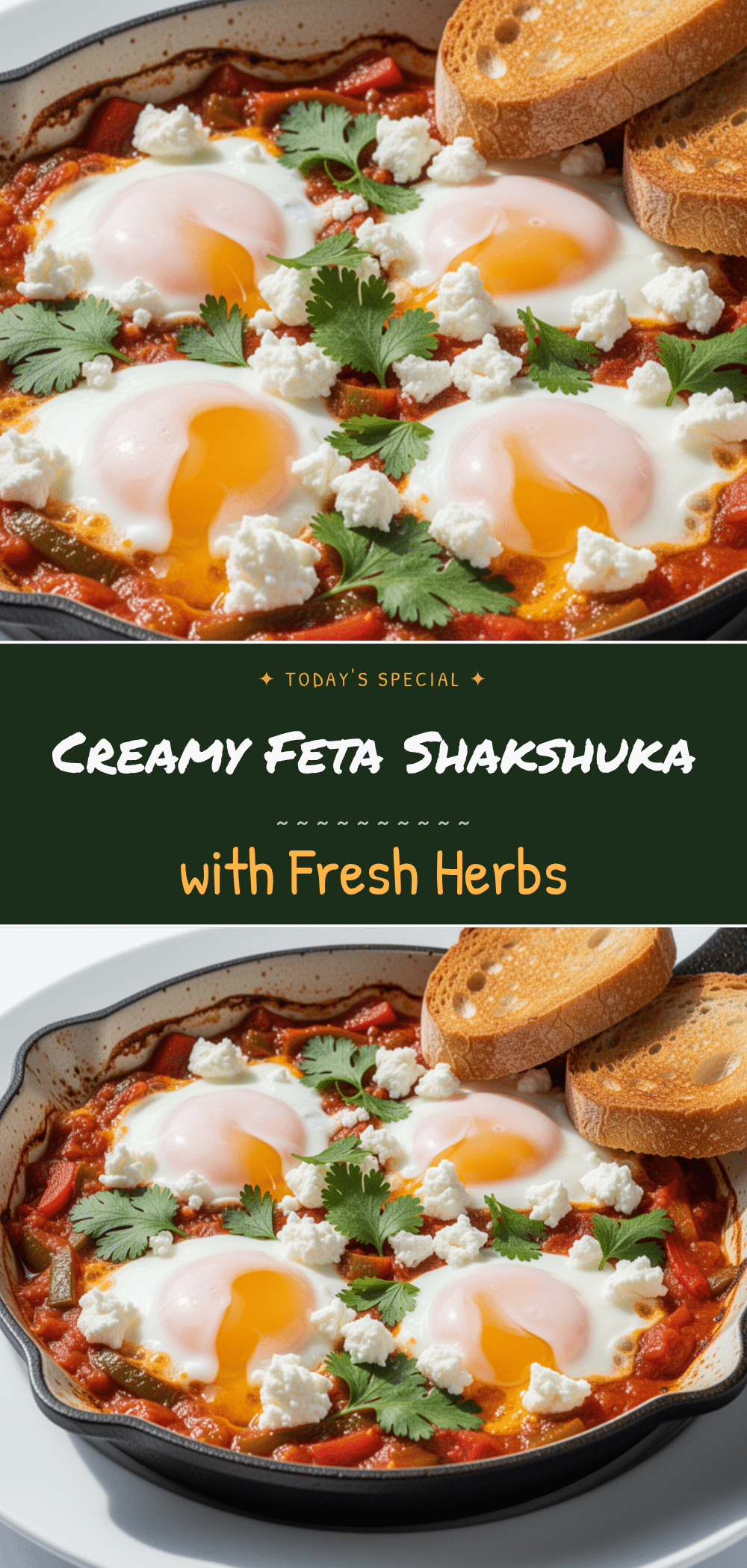

Classic Shakshuka with Feta and Herbs
- Total Time: 25 minutes
- Yield: 4 servings 1x
Description
A quick, one-skillet weeknight dinner featuring eggs poached in a rich, spiced tomato sauce with feta cheese. This Mediterranean-inspired dish is pantry-friendly, takes only 25 minutes to make, and serves as a versatile main course or brunch option.
Ingredients
- 2 tablespoons extra virgin olive oil
- 1 medium yellow onion, diced
- 1 large red bell pepper, diced
- 4 cloves garlic, minced
- 28 ounces crushed tomatoes (San Marzano recommended)
- 2 tablespoons tomato paste
- 1 teaspoon ground cumin
- 1 teaspoon smoked paprika
- 1/4 teaspoon cayenne pepper (optional)
- 1 teaspoon salt
- 1/2 teaspoon black pepper
- 4–6 large eggs
- 1/2 cup crumbled feta cheese
- 2 tablespoons fresh herbs (parsley, cilantro, or dill), chopped
- 1 tablespoon freshly squeezed lemon juice
- Crusty bread for serving
Instructions
- Prep ingredients: Dice the onion and bell pepper, mince the garlic, crumble the feta, and chop the herbs.
- Heat the olive oil in a 12-inch skillet over medium heat. Add the onion and bell pepper, cooking for 3-4 minutes until softened.
- Add the garlic, cumin, paprika, and cayenne. Cook for 1 minute until fragrant, being careful not to burn the garlic.
- Stir in the crushed tomatoes and tomato paste. Season with salt and black pepper. Bring to a gentle simmer, then reduce heat to low.
- Simmer the sauce uncovered for 5-7 minutes until it thickens slightly and darkens in color.
- Make four small wells in the sauce. Crack an egg into each well. Sprinkle crumbled feta over the eggs and around the skillet.
- Cover the skillet and cook for 5-7 minutes, or until egg whites are set and yolks are still slightly jiggly.
- Remove from heat. Sprinkle with fresh herbs and a squeeze of lemon juice.
- Serve immediately with crusty bread for dipping.
Notes
Use a wide skillet to ensure eggs cook evenly in a single layer. Do not skip the tomato paste as it adds depth. Eggs continue to cook off the heat, so remove them when yolks are slightly jiggly. Leftovers can be stored in the refrigerator for up to 3 days; reheat gently in a skillet with a splash of water.
- Prep Time: 5 minutes
- Cook Time: 20 minutes
- Category: Main Course
- Cuisine: Mediterranean
Nutrition
- Serving Size: 1 portion with eggs
- Calories: 280
- Sugar: 7
- Sodium: 650
- Fat: 18
- Saturated Fat: 8
- Carbohydrates: 12
- Fiber: 3
- Protein: 14
Keywords: shakshuka, feta, eggs, tomato sauce, weeknight dinner, one skillet, vegetarian, breakfast, brunch, easy recipe


