I have a confession to make. For about six months, I was the person who bought the box of “keto-friendly” muffins from the grocery store freezer aisle. You know the ones. They’re usually priced at $7.99 for a pack of four, wrapped in plastic that fogs up the moment you open the bag, and they taste like… well, like they were trying very hard to be muffins but gave up halfway through.
I bought them because I was trying to cut back on carbs for a few weeks. I wanted something portable. I wanted something that didn’t require me to stand over a stove at 6 AM. I thought I was being smart. Then I took a bite of one of those almond flour muffins, and it tasted like dry sawdust mixed with regret. Not a good combination.
I threw the rest in the trash (or maybe my husband did, I was too embarrassed to admit I’d paid that much for disappointment). That night, I decided to try making them myself. I had almond flour in the pantry from a previous baking disaster (more on that later), and I had a bag of frozen raspberries that were slowly turning into ice crystals in the back of my freezer. I figured, what’s the worst that could happen? Another dry brick?
It turned out to be the best thing I’ve baked in years.
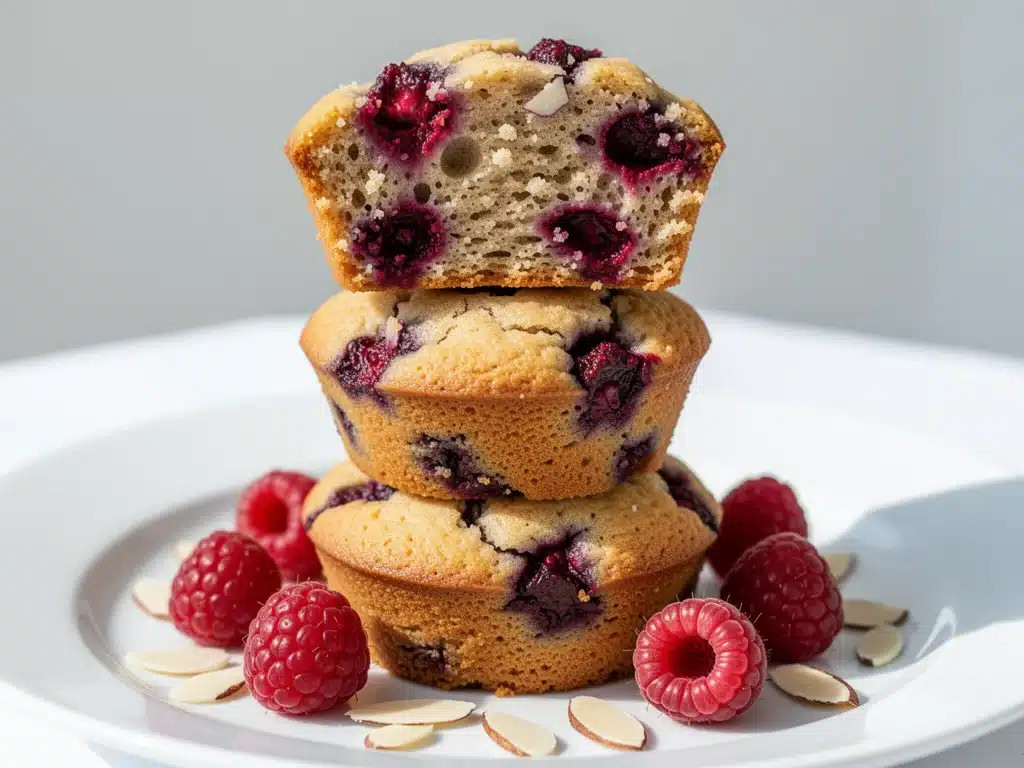
These low-carb raspberry almond flour muffins are nothing like the store-bought ones. They’re moist, tender, and actually smell like a bakery. The raspberries burst in your mouth, adding that perfect tartness that cuts through the richness of the almond flour. And the best part? The ingredient list is so short you can probably read it while the muffins are still in the oven.
I’ve made these at least a dozen times since that first attempt. Some mornings I eat two with my coffee. Other times, I pack them in my lunchbox because they hold up better than any carb-heavy pastry I’ve ever had. If you’re tired of dry, chalky keto baking, you need to stop reading this and start preheating your oven. Seriously.
Why You’ll Love This Low-Carb Almond Flour Muffin Recipe
There are a million reasons to make these, but let’s be real: the main reason is that they actually taste good. But here’s why they’ve earned a permanent spot in my weekly rotation:
Stupid Simple Ingredients — You probably have everything you need right now. Almond flour, eggs, a sweetener, butter, baking powder, and raspberries. That’s it. No weird gums, no xanthan flour, no trips to three different specialty stores. I’ve made these with pantry staples while traveling. It works.
Actually Moist — This is the biggest hurdle with almond flour baking. Almond flour has no gluten, so it doesn’t trap air the same way wheat flour does. It can get dense. These muffins? They’re tender. The key is the ratio of wet to dry ingredients and not overmixing the batter. I tested this recipe until I got that perfect crumb. It’s soft, not crumbly, not dry.
Low-Carb Friendly — If you’re watching your carbs, these are a lifesaver. They’re naturally gluten-free and low in net carbs. I use a simple erythritol or monk fruit blend, but you can adjust based on your preference. They’re perfect for breakfast, a snack, or even a light dessert after a heavy meal like grilled garlic herb flank steak.
Freezer-Friendly — I make a double batch every Sunday. They freeze beautifully. I keep a container in the freezer for those mornings when I’m running late and need something warm and satisfying in under five minutes. They thaw out perfectly, even at room temperature.
Budget-Smart — Almond flour can be pricey, but you only need about two cups for this recipe. When you compare it to $8 worth of store-bought keto muffins, making these at home saves you money and gives you way more flavor. Plus, you control the sweetness.
I’ve served these to friends who aren’t even on a low-carb diet, and they’ve asked for the recipe. There’s no “keto taste” here. Just good, honest baking.
Ingredients You’ll Need
Here’s the beauty of this recipe: it’s short. Really short. I’m particular about a few things here, so pay attention to the details.
For the Muffin Base
Almond Flour (2 cups / 200g) — This is non-negotiable. Use blanched almond flour. It’s fine and pale, which gives you that tender texture. If you use almond meal (the stuff with the skins on), your muffins will be gritty and dark. I buy mine in bulk to save money, but make sure it’s finely ground. If it’s too coarse, pulse it in a food processor for 30 seconds.
Eggs (3 large) — Room temperature eggs mix better into the batter. I take them out of the fridge about 20 minutes before I start. They help bind everything together since there’s no gluten.
Butter (½ cup / 115g, melted) — Melted butter adds richness and moisture. You can use unsalted butter so you control the salt level. If you’re dairy-free, coconut oil works, but it will change the flavor slightly. I stick with butter.
Sweetener (½ cup / 100g granulated) — I use a 1:1 erythritol or monk fruit blend. Swerve and Lakanto are my go-tos. They measure like sugar and don’t have the weird aftertaste some sweeteners have. If you use liquid stevia, you’ll need to adjust the liquid in the recipe, which gets tricky. Stick to granulated for this one.
Baking Powder (1 ½ teaspoons) — Make sure it’s fresh. If your baking powder is older than six months, your muffins won’t rise properly. I keep a fresh can in my pantry specifically for baking days.
Salt (½ teaspoon) — Just a pinch to balance the sweetness. Don’t skip it.
For the Flavor
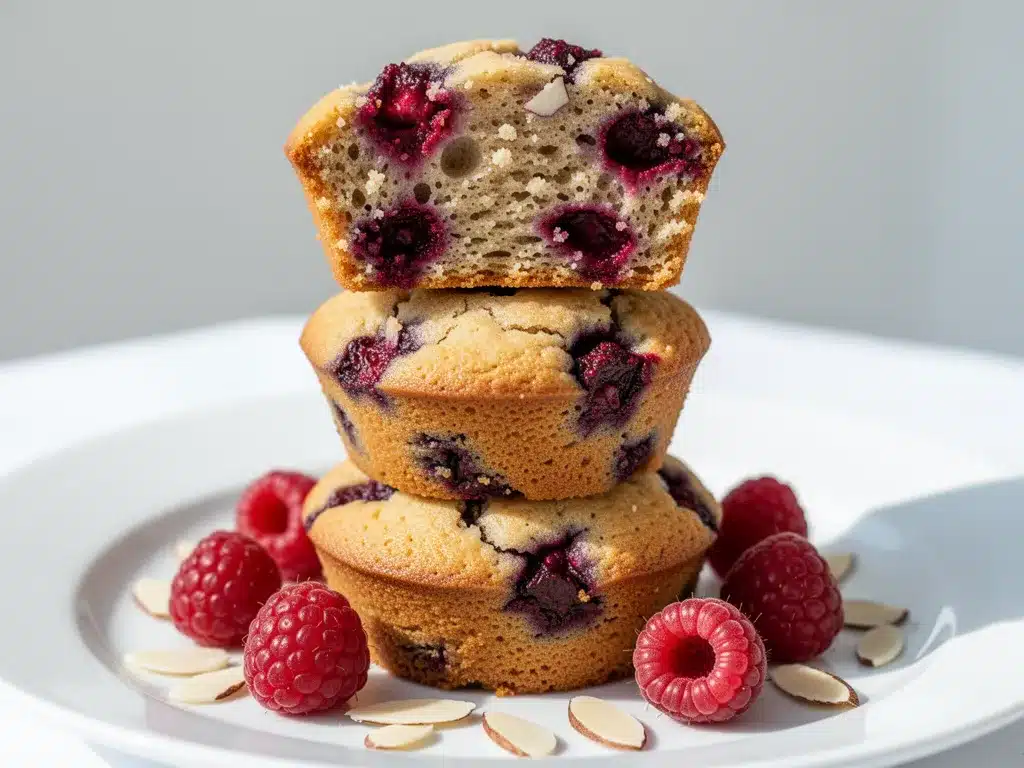
Raspberries (1 ½ cups, fresh or frozen) — Fresh raspberries are beautiful, but frozen work just as well and are often cheaper. If you use frozen, do not thaw them first. Toss them in flour (or almond flour) to prevent them from sinking to the bottom. I love the tartness of raspberries, but blueberries work too if you’re not a fan of the seeds.
Vanilla Extract (1 teaspoon) — Pure vanilla, not imitation. It adds that warm, bakery smell that makes your kitchen feel like a café.
Lemon Zest (1 teaspoon, optional) — This is my secret weapon. The bright citrus notes lift the heavy almond flavor and make the raspberries pop. It’s subtle, but you’ll miss it if it’s not there.
Equipment Needed
You don’t need fancy tools for this. Here’s what I actually use:
12-Cup Muffin Tin — Standard size. I use a dark metal tin because it helps the bottoms brown nicely. Lighter tins can leave the bottoms pale.
Muffin Liners — Paper liners make cleanup a breeze. I use the pink ones because they make the muffins look prettier for photos, but any color works.
Mixing Bowls — One medium bowl for wet ingredients, one large for dry. I use glass bowls because I can see through them.
Whisk — A simple wire whisk is all you need. No stand mixer required. This is a hand-whisk recipe.
Spatula — A silicone spatula is great for folding in the raspberries without crushing them. I have a few from IKEA; they’re cheap and work perfectly.
Cooling Rack — Essential. If you leave them in the pan, the bottoms get soggy. I always transfer them to a rack.
How to Make It: Step-by-Step
Alright, let’s make these! It’s quick. About 10 minutes of prep and 20 minutes of baking. Here’s exactly how I do it.
Step 1: Prep Your Oven and Pan (5 minutes)
Preheat your oven to 350°F (175°C). Line your muffin tin with liners. I spray them lightly with non-stick spray just to be safe, though the butter in the batter usually does the job. This prevents sticking and makes removal easier.
Step 2: Mix the Dry Ingredients (2 minutes)
In a large bowl, whisk together the almond flour, baking powder, and salt. I do this first because it’s boring but important. Make sure there are no clumps of baking powder. Whisk until it’s uniform. If your almond flour has been sitting out, it might have absorbed some moisture, so give it a good stir.
Step 3: Mix the Wet Ingredients (2 minutes)
In a separate medium bowl, whisk the eggs, melted butter, sweetener, vanilla extract, and lemon zest. The melted butter should be warm but not hot—hot butter can cook the eggs if you’re not careful. Whisk until the mixture is smooth and slightly frothy. The sweetener might not dissolve completely, but that’s okay. It will melt in the oven.
Step 4: Combine Wet and Dry (2 minutes)
Pour the wet ingredients into the dry ingredients. Use your spatula to gently fold them together. Stop as soon as the last streaks of almond flour disappear. Do not overmix. Overmixing leads to dense muffins. The batter will be thick and sticky. This is normal. If it feels too dry, add a tablespoon of almond milk. If it’s too wet, add a tablespoon more almond flour.
Step 5: Fold in the Raspberries (2 minutes)
Here’s the tricky part. If using frozen raspberries, toss them in a teaspoon of almond flour first. This coating helps them suspend in the batter. Gently fold the raspberries into the batter. Be gentle! You want to distribute them evenly without crushing them into purple mush. If you crush them, you’ll get purple streaks but not those nice bursts of fruit.
Step 6: Fill the Muffin Tin (1 minute)
Distribute the batter evenly among the 12 muffin cups. They should be about ¾ full. I use an ice cream scoop or a large spoon to make sure each muffin gets the same amount. Consistent sizing means even baking.
Step 7: Bake (20-22 minutes)
Place the tin in the center of the oven. Bake for 20-22 minutes. The muffins are done when the tops are golden brown and a toothpick inserted into the center comes out clean or with just a few moist crumbs. They should spring back when you touch them lightly. Do not overbake! Almond flour dries out quickly. If they look done at 18 minutes, check them. Better to underbake slightly than overbake.
Step 8: Cool
Let the muffins cool in the pan for 5 minutes, then transfer them to a wire rack to cool completely. This step is crucial for texture. If you eat them hot, they’ll be fragile. Once cooled, they firm up and become tender.
Expert Tips & Tricks
I’ve made these dozens of times, and I’ve learned a few things the hard way. Here’s how to guarantee success.
Don’t Skimp on the Eggs — Eggs are the structure here. If you try to reduce them, the muffins will collapse. Stick to three large eggs.
Frozen vs. Fresh Berries — I prefer frozen raspberries for these. They’re picked at peak ripeness and frozen instantly, so they’re often more flavorful than fresh berries that have been sitting in a store. Just don’t thaw them! Thawing releases water and makes the batter soggy.
Check Your Almond Flour — If your almond flour is oily or clumpy, it’s old. Fresh almond flour smells nutty and sweet. If it smells rancid, toss it. Rancid almond flour ruins the whole batch.
Use a Scale — Almond flour is dense. Measuring by volume can be inaccurate. If you have a kitchen scale, use it. 200g is much more reliable than “2 cups.” I switched to weighing my dry ingredients last year, and my baking has improved dramatically.
Add Chocolate Chips — If you’re not a raspberry fan, dark chocolate chips (sugar-free) work great. Or add a tablespoon of cocoa powder to the dry ingredients for a chocolate-almond muffin.
Storage Tip — Store in an airtight container at room temperature for up to 3 days. In the fridge for up to 5 days. In the freezer for up to 3 months. I wrap them in plastic wrap first, then put them in a bag. This prevents freezer burn.
Variations & Substitutions
Once you’ve mastered the basic recipe, here’s how you can mix it up. I’ve tried all of these.
Lemon Blueberry — Swap raspberries for blueberries. Add 1 tablespoon of lemon zest and 1 teaspoon of lemon juice to the wet ingredients. It’s like a mini lemon cake.
Chocolate Almond — Add 2 tablespoons of unsweetened cocoa powder to the dry ingredients. Add ½ cup of sugar-free chocolate chips. These are dangerously good.
Peanut Butter — Swirl 2 tablespoons of sugar-free peanut butter into the batter before baking. Create a marble effect with a knife. High protein and very satisfying.
Gluten-Free — This recipe is naturally gluten-free. Just make sure your baking powder and sweetener are certified gluten-free if you have celiac disease.
Dairy-Free — Substitute the melted butter with coconut oil or avocado oil. The texture will be slightly different, but still good.
Sweetener-Free — You can use mashed ripe banana or unsweetened applesauce, but this will add carbs and change the flavor. It’s not low-carb anymore, but it’s still a healthy muffin option.
Serving & Storage
How to Serve — I eat these warm, right after they’ve cooled for 5 minutes. They’re perfect with a cup of black coffee or tea. I also like to toast them lightly in a toaster oven for 2 minutes. It brings back that fresh-baked crunch on the outside.
Pairing Ideas — These go great with a glass of almond milk or a smoothie. If you’re having a brunch, serve them alongside fluffy ricotta lemon pancakes for a carb-heavy/low-carb mix-and-match spread.
Storage Instructions — Refrigerator: Up to 5 days in an airtight container. Freezer: Up to 3 months. Thaw at room temperature for 30 minutes or microwave for 30 seconds. Do not refreeze after thawing.
Pro Tip — If your muffins seem dry after storing, wrap them in a damp paper towel and microwave for 15 seconds. The steam will rehydrate them instantly.
Nutrition Information
I’m not a nutritionist, but here’s the breakdown if you’re tracking macros. This is per muffin, based on 12 servings.
– Calories: 140
– Protein: 5g
– Carbs: 3g
– Fiber: 2g
– Net Carbs: 1g
– Fat: 12g
– Sugar: 1g (natural from berries)
What’s Good — High in healthy fats from almonds, low in net carbs, decent protein. Great for keto or low-carb diets.
What to Know — Almond flour is calorie-dense, so portion control matters. One or two muffins is a perfect snack. Don’t eat the whole batch in one sitting (I know, it’s hard).
Dietary Notes — Gluten-free, grain-free, low-carb, keto-friendly. Contains nuts and eggs. Not vegan.
Final Thoughts
So that’s my low-carb raspberry almond flour muffin recipe. I hope it saves you from buying those dry, overpriced store-bought ones. I know how frustrating it is to try to eat healthy and feel like you’re missing out on good food. But these muffins prove that you don’t have to sacrifice taste for health.
They’ve become a staple in my house. My kids love them, my husband requests them, and I feel good about eating them. They’re simple, they’re delicious, and they’re surprisingly easy to make.
Make them this weekend. Try the lemon variation. Add some chocolate chips. Make them yours. And if you do, let me know how they turn out. I love hearing from you.
Happy baking! And I hope your kitchen smells amazing.
Frequently Asked Questions
Can I use almond meal instead of almond flour?
You can, but the texture will be different. Almond meal has the skins on, so it’s coarser and darker. Your muffins will be denser and have a speckled look. If you want that rustic look, go for it. But for tender, light muffins, blanched almond flour is the way to go.
Why did my muffins crumble?
This usually happens if you overbaked them or didn’t use enough binding agents. Almond flour doesn’t have gluten, so it relies on eggs to hold together. Make sure you’re using three large eggs and not overmixing the batter. Also, let them cool completely before handling. They’re fragile when hot.
Can I freeze the batter?
No, I don’t recommend it. The leavening agents (baking powder) start working as soon as they hit the wet ingredients. If you freeze the batter, the muffins won’t rise properly. It’s better to bake them and freeze the finished product.
What if I don’t have erythritol?
You can use monk fruit sweetener, allulose, or stevia. Just make sure it’s a granulated, 1:1 replacement sweetener. Liquid sweeteners will throw off the liquid balance in the recipe. If you use liquid stevia, you’ll need to reduce the butter or add more almond flour, which is tricky to get right.
Can I add protein powder?
Yes, but be careful. Protein powder absorbs a lot of moisture. If you add ¼ cup of whey or casein protein, you might need to add an extra egg or a tablespoon of milk. Start with a small amount and test. I usually stick to plain almond flour for the best texture, but a little protein powder can boost the nutrition.
How do I know when they’re done?
Look for golden brown tops. The edges should pull away slightly from the liner. A toothpick inserted into the center should come out clean or with a few moist crumbs. If it’s wet batter, they need more time. If it’s dry, they’re done. Almond flour burns easily, so keep an eye on them after 18 minutes.
Pin This Recipe!
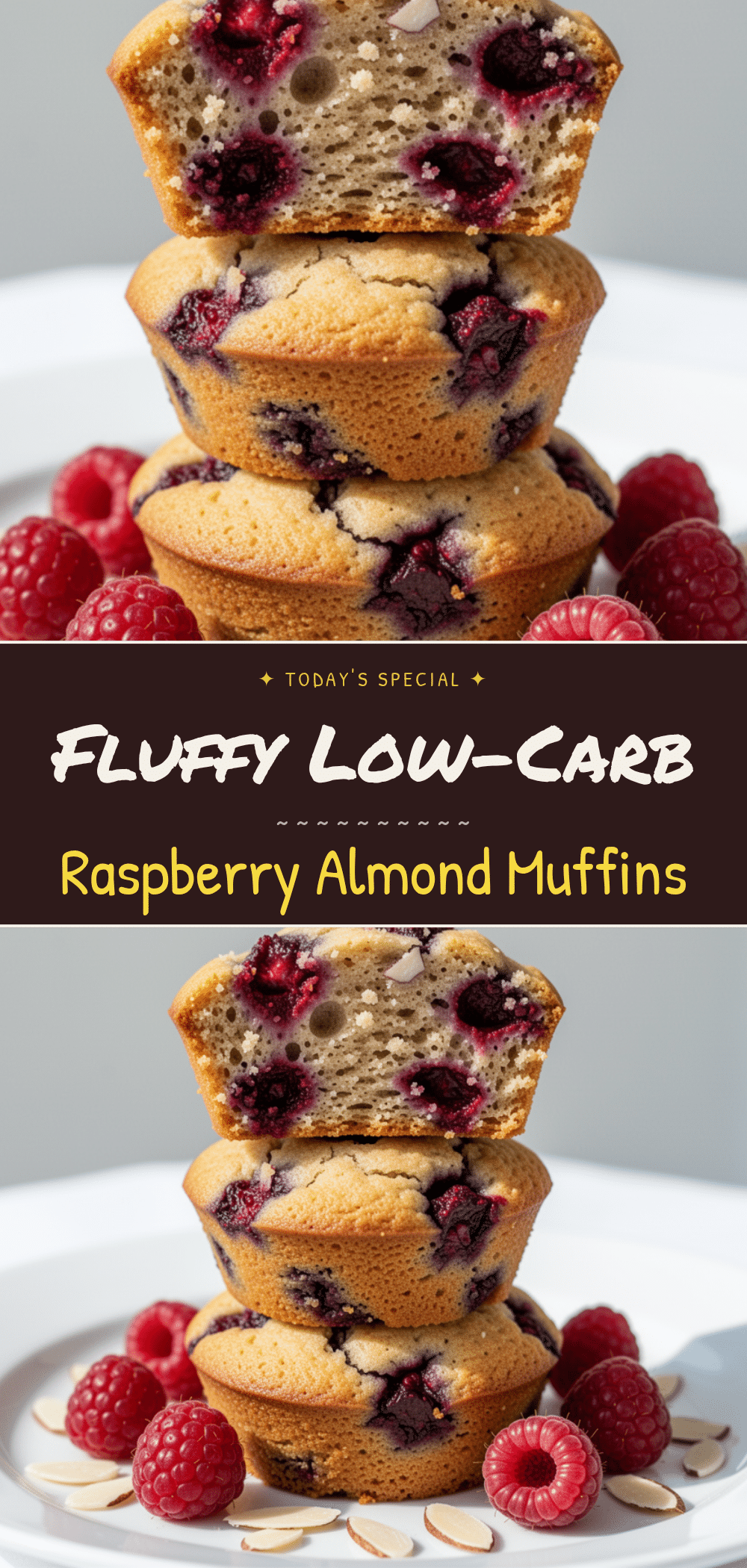

Low-Carb Raspberry Muffins: Easy Almond Flour Recipe
- Total Time: 30 minutes
- Yield: 12 servings 1x
Description
Moist, tender, and low-carb muffins made with almond flour and fresh or frozen raspberries. These gluten-free, keto-friendly treats are easy to make with simple pantry staples and taste like real bakery muffins.
Ingredients
- 2 cups (200g) blanched almond flour
- 3 large eggs, room temperature
- ½ cup (115g) unsalted butter, melted
- ½ cup (100g) granulated erythritol or monk fruit blend
- 1 ½ teaspoons baking powder
- ½ teaspoon salt
- 1 ½ cups fresh or frozen raspberries
- 1 teaspoon pure vanilla extract
- 1 teaspoon lemon zest (optional)
Instructions
- Preheat oven to 350°F (175°C). Line a 12-cup muffin tin with liners and lightly spray with non-stick spray.
- In a large bowl, whisk together the almond flour, baking powder, and salt until uniform.
- In a separate medium bowl, whisk the eggs, melted butter, sweetener, vanilla extract, and lemon zest until smooth and slightly frothy.
- Pour the wet ingredients into the dry ingredients. Gently fold together with a spatula until just combined. Do not overmix.
- If using frozen raspberries, toss them in a teaspoon of almond flour first. Gently fold the raspberries into the batter.
- Divide the batter evenly among the 12 muffin cups, filling them about ¾ full.
- Bake for 20-22 minutes, or until tops are golden brown and a toothpick inserted into the center comes out clean.
- Let muffins cool in the pan for 5 minutes, then transfer to a wire rack to cool completely.
Notes
Use blanched almond flour for a tender texture; almond meal will make them gritty. Do not thaw frozen raspberries before adding to prevent soggy batter. Almond flour is dense, so weighing ingredients is more accurate than measuring by volume. Store in an airtight container at room temperature for 3 days, fridge for 5 days, or freezer for 3 months.
- Prep Time: 10 minutes
- Cook Time: 20 minutes
- Category: Breakfast
- Cuisine: American
Nutrition
- Serving Size: 1 muffin
- Calories: 140
- Sugar: 1
- Sodium: 100
- Fat: 12
- Saturated Fat: 6
- Carbohydrates: 3
- Fiber: 2
- Protein: 5
Keywords: low-carb, keto, almond flour, raspberry muffins, gluten-free, dairy-free option, easy baking, healthy breakfast


