Last October, I was stuck in one of those Sunday evening slumps. You know the one. The weekend is over, the grocery store is closed, and the only thing in my fridge is a sad bag of wilting spinach and three carrots that have turned slightly orange. I was ready to order takeout. Again. But then I remembered a tip from a cooking class I took years ago about roasting veggies at high heat. I threw everything on a sheet pan, drizzled it with some olive oil, salt, and a weird combination of maple syrup and Dijon mustard I had lying around, and put it in the oven.
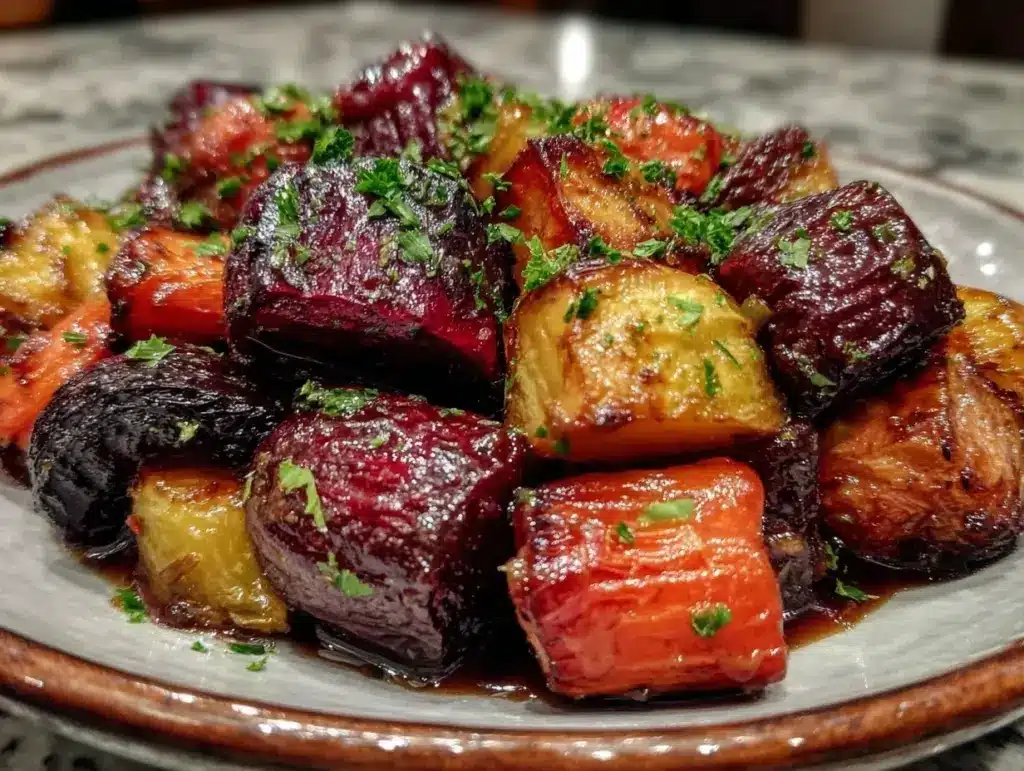
What came out wasn’t just “edible vegetables.” It was caramelized, sticky, sweet, tangy, and deeply savory. My kids, who usually pick the broccoli off their plate like it’s evidence in a crime scene, asked for seconds. I was shocked. They were shocked. We ate the entire pan in ten minutes, scraping the browned bits from the corners of the baking sheet because that’s where all the flavor lived.
That was the moment I realized I’d been treating vegetables like a chore. Since then, I’ve made this Crispy Roasted Vegetables with Maple Dijon Glaze at least thirty times. It’s become my secret weapon for weeknight dinners, holiday sides, and even when I need to impress friends without spending hours in the kitchen. The magic isn’t in the vegetables themselves—it’s in that glaze. The maple provides a subtle sweetness that caramelizes beautifully, while the Dijon cuts through with a sharp, spicy kick that keeps it from tasting like dessert. It’s a balance I’ve chased in every variation since that first accidental success.
Here’s the thing about this recipe: it’s forgiving. You can use whatever is in your fridge. You can roast it for thirty minutes or an hour. But if you follow the steps I’ve perfected, you’ll get that specific crispy-tender texture that makes people ask, “What is this secret ingredient?” Spoiler: it’s just good technique and a little bit of mustard.
Why You’ll Love This Recipe
I’m not exaggerating when I say this has changed how I think about dinner. It’s not just about getting your greens in; it’s about enjoying food. Here is why this Crispy Roasted Vegetables with Maple Dijon Glaze deserves a permanent spot in your rotation:
- Zero Prep Stress — I make this after work, tired and hungry. The chopping takes 10 minutes max. If you can hold a knife, you can make this. I once chopped while watching a documentary, and it still turned out perfectly.
- Pantry Staple Glaze — You don’t need to go to the store for this. Maple syrup and Dijon are in almost every kitchen. It’s a flavor combo that feels fancy but costs pennies compared to restaurant sides.
- Texture Heaven — Most roasted veggies end up soggy. Not this. By roasting at high heat and tossing them right before serving, you get edges that are crispy and centers that are tender. It’s the difference between “side dish” and “main event.”
- Flavor Complexity — It’s sweet, salty, tangy, and savory all in one bite. The mustard doesn’t make it taste like mustard; it adds depth. My husband says it tastes like something he’d order at a bistro.
- Leftover Gold — This actually tastes better the next day. The flavors meld together overnight. I’ve packed this for lunch at work more than once, and colleagues always ask for the recipe.
- Family Approved — Picky eaters usually hate “healthy” food. They love this. The maple sugar masks the bitterness of greens, and the crispiness makes carrots feel like fries.
This is my go-to when dinner needs to just work, but I still want to feel like I cooked something thoughtful.
Key Ingredients for the Perfect Glaze
Let’s talk about what makes this Crispy Roasted Vegetables with Maple Dijon Glaze sing. The vegetables are flexible, but the glaze needs to be precise. I’ve tested dozens of ratios, and this is the one that sticks to the veggies without making them soggy.
Maple Syrup (3 tbsp / 45 ml) — Use real maple syrup, grade A or B. I prefer Grade B for its stronger, deeper flavor. Fake pancake syrup is just colored sugar water and will make your veggies sticky and cloying. Real maple has notes of vanilla and wood that complement the savory elements.
Dijon Mustard (2 tbsp / 30 g) — This is the backbone. I use a standard French Dijon, like Grey Poupon or Maille. It provides the sharpness that balances the sweet. If you don’t have Dijon, whole grain mustard works, but you lose that smooth emulsion that helps the glaze cling.
Olive Oil (2 tbsp / 30 ml) — Extra virgin is best for flavor, but don’t be afraid to use a lighter oil if you’re worried about smoke points. I usually split the difference: 1 tbsp extra virgin for taste, 1 tbsp avocado oil for high-heat stability.
Garlic (3 cloves, minced / 1 tbsp) — Fresh garlic only. Jarred minced garlic has a metallic, sour taste that ruins the glaze. Mince it finely so it disperses evenly. If you’re sensitive to raw garlic, this roasting process mellows it out significantly.
Dried Thyme (1 tsp / 1 g) — Thyme pairs beautifully with maple. It adds an earthy, herbal note that grounds the sweetness. Fresh thyme works too, but use 3 sprigs and remove them before serving, or the leaves will burn.
Salt and Black Pepper (1 tsp kosher salt / 1/2 tsp black pepper) — Don’t skip the salt. It enhances the natural sugars in the vegetables. Use kosher salt because it’s easier to control than table salt. Freshly cracked pepper adds a nice bite.
Vegetables (4-5 cups / 600-750 g) — This is where you get creative. Root vegetables hold up best. I love a mix of sweet potatoes, Brussels sprouts, and carrots. But cauliflower, broccoli, and even green beans work. Just keep the pieces uniform.
Tools Needed
You don’t need fancy equipment. Here’s what I use to get those crispy edges without burning the house down.
Large Sheet Pans — I use two half-sheet pans. If you crowd the veggies, they steam instead of roast. Crowding is the enemy of crispiness. I’ve learned this the hard way. If you only have one pan, roast in batches.
Parchment Paper — Lining your pan saves cleanup. The maple syrup caramelizes and sticks, and scrubbing baked sugar off metal is a nightmare. Parchment paper lifts right off. I also use silicone mats, but parchment is cheaper and easier to replace.
Large Mixing Bowl — A bowl big enough to toss the veggies without spilling. I use a 4-quart stainless steel bowl. It’s heavy enough not to slide around.
Whisk — Small but mighty. You need to emulsify the oil, maple, and mustard before tossing. A whisk ensures no lumps of mustard remain.
Tongs — For tossing the veggies. It’s much easier than using a spoon, which can bruise delicate vegetables like Brussels sprouts.
How to Make Crispy Roasted Vegetables with Maple Dijon Glaze
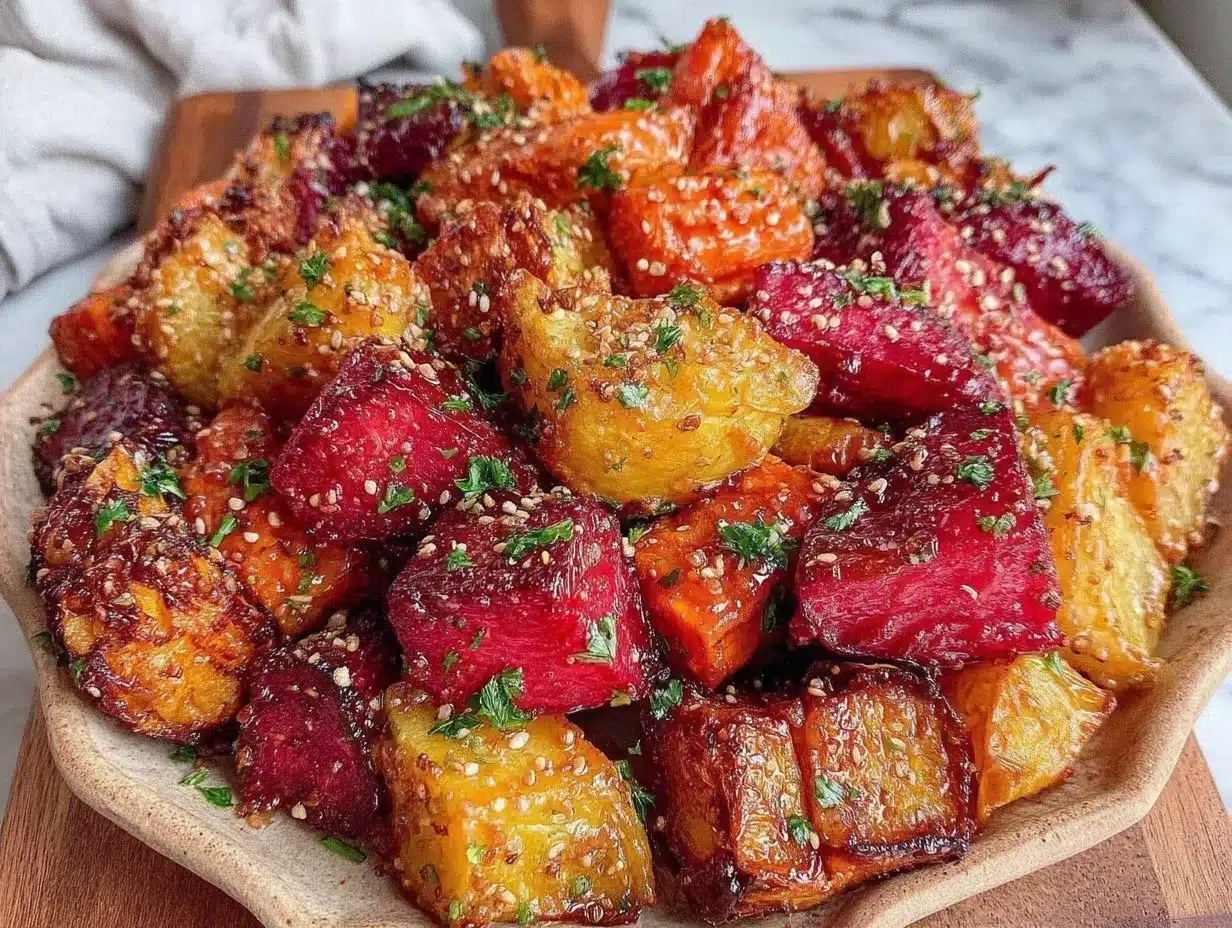
Let’s get cooking. This process is straightforward, but timing matters. I’m walking you through exactly how I do it to ensure maximum crispiness.
Step 1: Prep the Oven and Pan (5 minutes)
Preheat your oven to 425°F (220°C). This high heat is crucial. Lower temps will dry out the veggies without crisping them. Line your sheet pans with parchment paper. If you’re using two pans, place them on opposite racks with space between them for air circulation.
Step 2: Chop the Vegetables (10 minutes)
Wash and dry your vegetables thoroughly. Moisture is the enemy of crispiness. Pat them dry with a towel. Chop them into uniform pieces. For root veggies like carrots and sweet potatoes, cut them into 1-inch chunks. For Brussels sprouts, halve them if they’re large, or leave small ones whole. Cauliflower should be cut into florets of similar size. Uniformity ensures even cooking. If you have tiny pieces and huge chunks, the small ones will burn before the big ones are tender.
Step 3: Make the Glaze (2 minutes)
In your large mixing bowl, whisk together the olive oil, maple syrup, Dijon mustard, minced garlic, dried thyme, salt, and pepper. Whisk until the mixture is smooth and emulsified. It should look like a slightly thickened dressing. Taste it—it should be sweet and tangy. If it’s too sweet, add a pinch more salt or a splash of lemon juice.
Step 4: Toss the Vegetables (3 minutes)
Add the chopped vegetables to the bowl with the glaze. Toss with tongs until every piece is lightly coated. You don’t want them swimming in sauce, just glazed. If you have a lot of veggies, do this in two batches. Overcrowding the bowl leads to uneven coating. Spread the veggies out on the prepared sheet pans in a single layer. Leave space between them. This is non-negotiable for crispiness.
Step 5: Roast (25-35 minutes)
Place the pans in the oven. Roast for 25 minutes. Then, pull the pans out and flip/toss the vegetables. This ensures even browning on all sides. Return to the oven and roast for another 10-15 minutes, depending on the size of your veggies. They are done when the edges are caramelized and crispy, and a fork slides easily into the thickest part. Watch closely in the last 5 minutes—maple syrup burns quickly.
Step 6: Finish and Serve (2 minutes)
Remove from the oven. Let them rest for 2 minutes so the glaze sets. Taste and adjust seasoning if needed. Add a final crack of black pepper or a sprinkle of flaky sea salt if you want that restaurant finish. Serve immediately while hot and crispy.
Total time: About 45 minutes from start to finish. Most of that is active prep, but the oven does the heavy lifting.
Expert Tips from a Vegetable Skeptic
I’ve made this too many times to count. Here’s everything I learned from those failures and successes.
The Moisture Trap
This is the #1 mistake. Wet vegetables steam. Always dry your veggies after washing. If you buy pre-cut veggies from the store, rinse them and pat them dry with paper towels. I once skipped this step and ended up with soggy, sad carrots. Never again.
Don’t Trust the Timer
Ovens vary. My oven runs hot. My friend’s oven runs cool. Check your veggies at the 25-minute mark. Look for browning, not just tenderness. If they’re tender but pale, give them 5 more minutes. If they’re browning too fast, lower the temp by 25°F.
The Glaze Ratio
I’ve tried less maple syrup, and the veggies lack that caramelized kick. I’ve tried more, and they get sticky and sweet. The 3:2 ratio of maple to mustard is the sweet spot. It balances flavor and texture perfectly.
Flaky Salt Finish
After roasting, a sprinkle of flaky sea salt (like Maldon) changes the game. It adds a crunch and a burst of salinity that contrasts with the sweet glaze. It’s a small step that makes a huge difference.
Common Problem: Soggy Veggies
Solution: You overcrowded the pan. Use two pans or roast in batches. Air needs to circulate to crisp the exterior.
Common Problem: Burnt Garlic
Solution: Minced garlic burns fast. If your garlic is browning too quickly, cover the pan with foil for the last 5 minutes of roasting. Or, add the garlic to the glaze right before tossing, not before roasting, to reduce exposure time.
Recipe Variations
Once you’ve nailed the basic version, here’s how to mix it up. This Crispy Roasted Vegetables with Maple Dijon Glaze is a canvas.
Spicy Kick
Add 1/2 tsp red pepper flakes to the glaze. The heat cuts through the sweetness beautifully. I love this with Brussels sprouts.
Herb Garden
Swap thyme for rosemary or sage. Rosemary is woody and pairs well with potatoes. Sage is earthy and great with squash. Use fresh herbs, but add them in the last 10 minutes of roasting to prevent burning.
Asian-Inspired Twist
Swap the Dijon for soy sauce and add ginger. Use sesame oil instead of olive oil. Garnish with sesame seeds. It’s a completely different flavor profile but uses the same technique.
Mediterranean Style
Add chopped kalamata olives and feta cheese after roasting. The saltiness of the feta balances the maple. Great with zucchini and eggplant.
Gluten-Free
This recipe is naturally gluten-free. Just ensure your Dijon and maple syrup are certified GF (some mustards have wheat starch, though rare).
Vegan
This is already vegan. No dairy, no animal products. Just veggies, oil, maple, and mustard.
Serving & Storage
Serving:
I serve this as a side to grilled meats, like grilled flank steak or Huli Huli chicken. It also pairs well with roasted chicken or fish. For a vegetarian main, serve it over quinoa or rice. Top with toasted nuts (pecans or walnuts) for extra crunch.
Storage:
Store leftovers in an airtight container in the refrigerator for up to 4 days. They reheat well in the oven or air fryer at 375°F for 5-7 minutes to restore crispiness. The microwave will make them soft, so avoid it if you care about texture.
Freezing:
This doesn’t freeze well. The vegetables become mushy when thawed. Roast fresh for best results. I recommend making a smaller batch if you’re freezing, and saving the rest for fresh eating.
Nutrition Information
I’m not a nutritionist, but here’s the breakdown per serving (approx. 1 cup).
| Nutrient | Amount |
|---|---|
| Calories | 180 |
| Protein | 3g |
| Carbs | 28g |
| Fiber | 5g |
| Fat | 7g |
| Sodium | 320mg |
My Take:
This is a healthy side dish, but the maple syrup adds sugar. It’s not “diet” food, but it’s better than fries or mashed potatoes. It’s nutrient-dense, high in fiber, and packed with vitamins. Just be mindful of portion sizes if you’re watching sugar intake.
Final Thoughts
This Crispy Roasted Vegetables with Maple Dijon Glaze is more than a side dish. It’s a reminder that vegetables can be exciting, flavorful, and deeply satisfying. I’ve made it for holidays, weeknights, and lazy Sundays. It never fails to impress. If you make this, drop a comment! I love hearing how it turns out in your kitchen. Try different veggies, tweak the spices, and make it your own. Happy cooking!
FAQs
Can I use frozen vegetables?
Technically yes, but I don’t recommend it. Frozen veggies release a lot of water and will steam instead of roast. You’ll end up with soggy results. Fresh or thawed and thoroughly dried veggies are best for crispiness.
What vegetables work best with this glaze?
Root vegetables are ideal. Carrots, sweet potatoes, parsnips, and beets hold up well. Brussels sprouts, cauliflower, and broccoli are also great. Avoid watery veggies like zucchini or cucumbers, as they become mushy.
Can I make this ahead of time?
You can prep the veggies and make the glaze ahead, but roast them just before serving for best texture. If you must roast ahead, reheat in the oven or air fryer to crisp them back up.
Why did my veggies burn?
Maple syrup burns easily. If your veggies are browning too fast, lower the oven temp by 25°F or cover with foil. Also, ensure your pieces are uniform so smaller pieces don’t burn before larger ones are done.
Is there a substitute for maple syrup?
Honey works, but it’s sweeter and has a different flavor. Agave nectar is milder. Brown sugar mixed with water can work, but maple syrup provides the best balance of sweetness and depth.
Can I add protein to this dish?
Absolutely. Toss in chickpeas or white beans in the last 10 minutes of roasting for a hearty vegetarian meal. Or serve alongside roasted chicken or tofu.
Pin This Recipe!
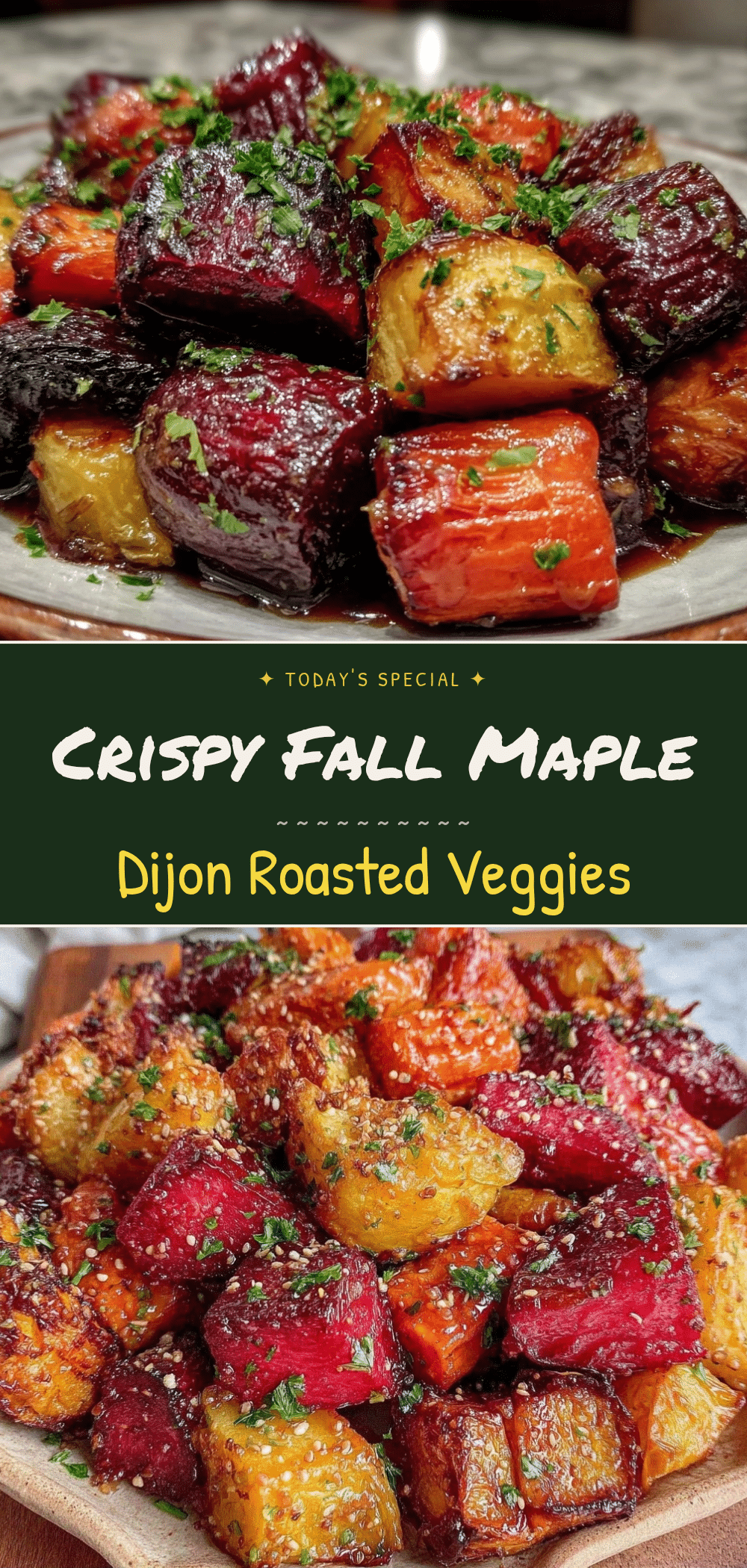
Crispy Roasted Vegetables with Maple Dijon Glaze
- Total Time: 45 minutes
- Yield: 4 servings 1x
Description
A forgiving and flavorful recipe for roasted vegetables tossed in a sweet and tangy maple Dijon glaze. High heat ensures crispy edges and tender centers, making it a perfect side dish or vegetarian main.
Ingredients
- 4–5 cups mixed vegetables (e.g., sweet potatoes, Brussels sprouts, carrots, cauliflower), chopped into uniform 1-inch pieces
- 3 tbsp real maple syrup (Grade A or B)
- 2 tbsp Dijon mustard
- 2 tbsp olive oil (split between extra virgin and avocado oil)
- 3 cloves garlic, minced
- 1 tsp dried thyme
- 1 tsp kosher salt
- 1/2 tsp black pepper
Instructions
- Preheat oven to 425°F (220°C). Line two half-sheet pans with parchment paper.
- Wash and thoroughly dry vegetables to ensure crispiness. Chop into uniform pieces.
- In a large mixing bowl, whisk together olive oil, maple syrup, Dijon mustard, minced garlic, dried thyme, salt, and pepper until emulsified.
- Add chopped vegetables to the bowl and toss with tongs until lightly coated. Do not overcrowd; use two batches if necessary.
- Spread vegetables in a single layer on the prepared sheet pans, leaving space between pieces for air circulation.
- Roast for 25 minutes. Remove pans and flip/toss vegetables to ensure even browning.
- Return to oven and roast for another 10-15 minutes, or until edges are caramelized and crispy. Watch closely in the last 5 minutes to prevent burning.
- Remove from oven and let rest for 2 minutes to allow glaze to set. Taste and adjust seasoning if needed. Serve immediately.
Notes
Ensure vegetables are dry before roasting to prevent steaming. Use uniform cuts for even cooking. If garlic burns, cover with foil for the last 5 minutes. For extra crunch, finish with flaky sea salt. Do not freeze leftovers as texture will suffer.
- Prep Time: 15 minutes
- Cook Time: 30 minutes
- Category: Side Dish
- Cuisine: American
Nutrition
- Serving Size: Approx. 1 cup per se
- Calories: 180
- Sugar: 18
- Sodium: 320
- Fat: 7
- Saturated Fat: 1
- Carbohydrates: 28
- Fiber: 5
- Protein: 3
Keywords: roasted vegetables, maple dijon glaze, crispy veggies, healthy side dish, vegan side, gluten-free recipe, weeknight dinner


