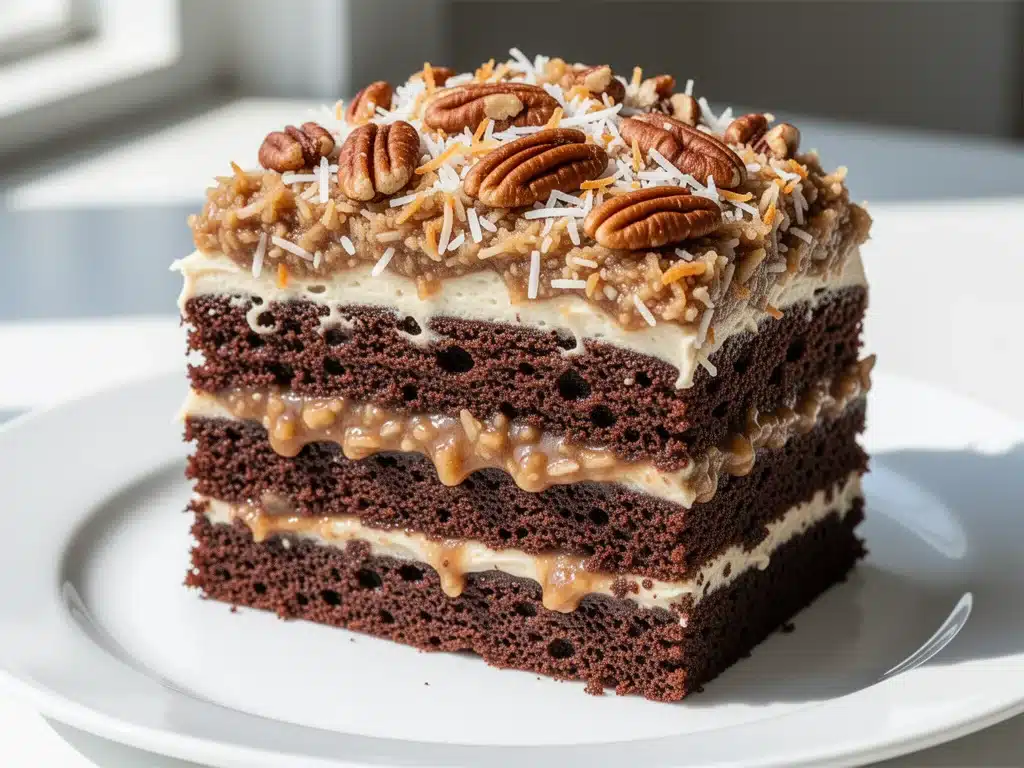
I still remember the exact smell that filled my childhood home the first time my mother baked this cake. It wasn’t just the chocolate; it was that distinct, nutty aroma of the coconut-pecan frosting simmering on the stove. It was sweet, rich, and smelled like celebration. We didn’t have fancy bakeries in our small town, so this homemade German Chocolate Cake was the gold standard for every birthday, holiday, and Sunday dinner. It was the dessert everyone craved, not because it was complicated, but because it tasted like love.
Fast forward twenty years, and I’ve made this cake dozens of times. I’ve tried mixes, I’ve tried fancy recipes from food magazines, and I’ve even tried those “healthy” versions that use applesauce instead of oil (spoiler: they don’t work). But nothing, and I mean nothing, beats the original ultra-moist German Chocolate Cake recipe that I’ve perfected over the years. It’s the kind of cake that disappears in minutes. I’ve made it for potlucks where people thought it was store-bought. I’ve made it for my husband’s birthday when he said he didn’t want anything fancy, and then he ate three slices. It’s reliable. It’s impressive. And it’s easier to make than you think.
This isn’t just another chocolate cake. It’s a specific type of cake—darker, sweeter, and richer than a standard chocolate layer cake. The key is in the frosting. That homemade coconut-pecan filling is what makes this cake legendary. It’s not a buttercream; it’s a custard-like topping that soaks into the cake layers, making every bite moist and flavorful. If you’re looking for a dessert that brings people together, this is it. It’s the kind of recipe that becomes a tradition. And honestly? Once you taste it, you’ll understand why it’s been a classic for over 60 years.
Why You’ll Love This Ultra-Moist German Chocolate Cake
There are a million chocolate cakes out there, but this one is different. It’s not just about the chocolate; it’s about the texture and that unique frosting. Here’s why this recipe has earned a permanent spot in my kitchen rotation and why your family will too.
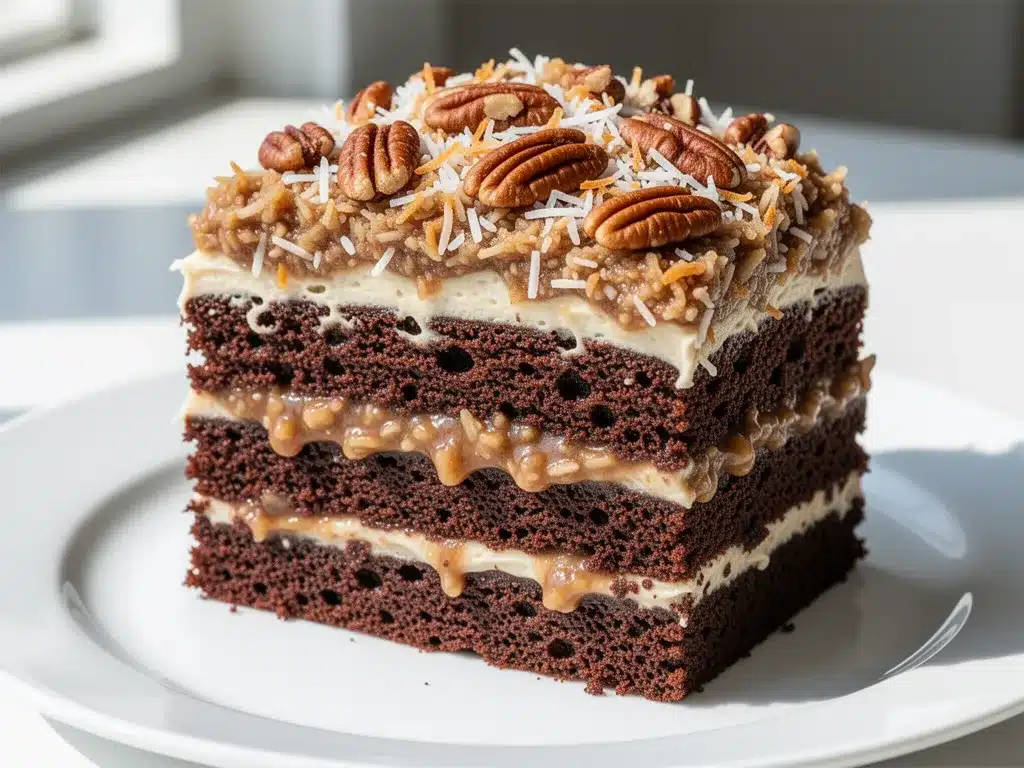
That Legendary Coconut-Pecan Frosting — This is the star of the show. Most people think “German Chocolate” is just a type of chocolate, but it’s actually named after Samuel German, who created a brand of baking chocolate. The frosting is a cooked mixture of evaporated milk, egg yolks, sugar, butter, coconut, and pecans. It’s rich, chewy, and nutty. I’ve tried store-bought frostings, and they just can’t compare to the depth of flavor you get when you cook this from scratch. It takes 15 minutes, but it’s worth every second.
Actually Moist, Not Dry — A lot of chocolate cakes end up dry, especially if you overbake them. This recipe uses oil instead of butter in the batter, which keeps it incredibly moist for days. I’ve left slices out on the counter for two days, wrapped in foil, and they were still soft and delicious. The oil coats the flour proteins better than butter, preventing that dry, crumbly texture. Plus, the buttermilk adds tang and tenderness.
Make-Ahead Friendly — This is a huge win for busy parents or hosts. You can bake the layers a day ahead, wrap them tightly, and store them at room temperature. Then, you just frost and decorate the next day. The cake actually tastes better after sitting overnight because the flavors meld together. It takes the stress out of hosting. I’ve made this for holiday dinners when I was already stressed about the turkey and stuffing. This cake handled itself.
Perfect for Any Occasion — Whether it’s a birthday, a wedding, a funeral, or just a Tuesday night treat, this cake fits. It’s elegant enough for a dinner party but simple enough for a casual family gathering. I’ve served it alongside simpler desserts like frozen lemonade icebox pie for summer barbecues, and it’s always a hit. It’s versatile, reliable, and universally loved.
Family-Tested and Approved — My kids are picky. They usually turn their noses up at “fancy” desserts, but they go crazy for this. The coconut and pecans in the frosting are a huge draw. I’ve made this for friends, neighbors, and coworkers, and I always get the same question: “Can I have the recipe?” It’s that good. It’s the kind of cake that makes people feel special.
Ingredients You’ll Need
Let’s talk about what goes into this cake. I want to be clear: this isn’t a complicated list, but the quality of ingredients matters. You don’t need anything exotic, but you do need the right stuff. Here’s what you’ll need for the cake and the frosting.
For the Cake Layers
All-Purpose Flour (2 cups / 250g) — This is your base. Don’t use cake flour unless you want a lighter texture. All-purpose gives that classic, dense-yet-soft crumb. Sift it with the other dry ingredients to avoid lumps.
Sugar (2 cups / 400g) — Yes, two full cups. This cake is sweet, but the sugar also helps retain moisture. Don’t try to reduce it significantly, or the cake will dry out. I’ve tried it; don’t ask how I know.
Cocoa Powder (¾ cup / 75g) — Use unsweetened, natural cocoa powder. I prefer Hershey’s or Ghirardelli. Avoid Dutch-processed cocoa unless you know what you’re doing, as it can change the pH balance and texture. This gives the cake its deep chocolate flavor.
Baking Powder & Baking Soda (1 tsp & 1 tsp respectively) — Both are needed for the rise. Baking soda reacts with the buttermilk, while baking powder helps with the overall lift. Make sure they’re fresh; old leavening agents make flat cakes.
Salt (1 tsp) — Essential for balancing the sweetness. Don’t skip it.
Eggs (3 large, room temperature) — Room temperature eggs emulsify better into the batter, creating a smoother, more uniform cake. Cold eggs can cause the batter to break.
Buttermilk (1 cup / 240ml) — This is the secret to moisture and tang. If you don’t have buttermilk, make your own by adding 1 tablespoon of lemon juice or vinegar to 1 cup of milk and letting it sit for 5 minutes. It works just as well.
Vegetable Oil (½ cup / 120ml) — As I mentioned, oil keeps the cake moist. Use a neutral oil like vegetable, canola, or light olive oil. Avoid strong olive oils, as they’ll overpower the chocolate.
Vanilla Extract (2 teaspoons) — Good quality vanilla makes a difference. I use pure vanilla, not imitation.
Boiling Water (1 cup / 240ml) — This is the game-changer. Pouring boiling water into the batter “blooms” the cocoa powder, intensifying the chocolate flavor. It also thins the batter, which helps create a tender crumb. Don’t skip this step.
For the Coconut-Pecan Frosting
Evaporated Milk (1 can / 12 oz) — Not condensed milk! Evaporated milk is unsweetened and has a rich, creamy flavor. It’s the base of the frosting. You can find it in the canned milk aisle.
Egg Yolks (3 large) — Yolks add richness and help thicken the frosting. Save the whites for another recipe, like fluffy ricotta lemon pancakes if you’re making breakfast the next day.
Sugar (1 ½ cups / 300g) — Granulated sugar sweetens the frosting. You can use brown sugar for a deeper flavor, but white sugar is traditional.
Butter (½ cup / 115g, unsalted) — Adds richness and helps the frosting set slightly as it cools.
Vanilla Extract (1 teaspoon) — For flavor.
Shredded Coconut (1 ½ cups) — Use sweetened shredded coconut. Unsweetened works but is less traditional and less sweet. I like the texture of sweetened coconut in the frosting.
Chopped Pecans (1 ½ cups) — Toasted pecans add crunch and nuttiness. Chop them roughly; you don’t want them too fine. If you’re allergic to nuts, you can skip them, but the texture will be different.
Equipment Needed
You don’t need fancy gear for this. Here’s what I actually use.
Two 9-inch Round Cake Pans — Grease and flour them, or line the bottoms with parchment paper. This prevents sticking and makes cleanup easier. I swear by parchment paper for this recipe.
Large Mixing Bowls — One for dry ingredients, one for wet. I use stainless steel bowls because they’re sturdy and easy to clean.
Electric Mixer — A hand mixer or stand mixer makes creaming the butter and sugar (if you’re using butter) or mixing the batter much easier. I use a stand mixer for consistency.
Whisk — For mixing the dry ingredients and the frosting. A whisk ensures there are no lumps.
Saucepan — For cooking the frosting. A heavy-bottomed saucepan prevents scorching. I use a 2-quart saucepan.
Wire Cooling Rack — Essential for cooling the cake layers evenly. Don’t leave them in the pans, or they’ll steam and get soggy.
Offset Spatula — For spreading the frosting. It makes leveling the cake layers much easier. If you don’t have one, a regular spatula works, but it’s trickier.
Measuring Cups and Spoons — Precision matters in baking. I use both cup measures for wet ingredients and spoon-and-level for dry ingredients.
How to Make It: Step-by-Step
Alright, let’s make this cake! I’m walking you through exactly how I do it, including the little tricks I’ve picked up over the years.
Step 1: Prep Your Oven and Pans
Preheat your oven to 350°F (175°C). Grease two 9-inch round cake pans with butter or non-stick spray. Dust them with flour, tapping out the excess. Or, line the bottoms with parchment circles for guaranteed easy removal. This step is crucial; nothing ruins a cake like sticking to the pan.
Step 2: Mix the Dry Ingredients
In a large bowl, whisk together the flour, sugar, cocoa powder, baking powder, baking soda, and salt. Make sure there are no lumps of cocoa powder. If you have a sifter, use it. Sifting aerates the flour and ensures a light texture.
Step 3: Combine the Wet Ingredients
In a separate bowl, beat the eggs lightly. Add the buttermilk, vegetable oil, and vanilla extract. Whisk until well combined. Then, pour the wet ingredients into the dry ingredients. Beat on medium speed for about 2 minutes. The batter will be thick.
Step 4: Add the Boiling Water
Carefully stir in the boiling water by hand. The batter will become very thin and watery. Don’t panic! This is normal. The hot water blooms the cocoa powder, enhancing the chocolate flavor. Pour the batter evenly into the prepared cake pans.
Step 5: Bake the Cakes
Bake for 30-35 minutes. Check for doneness by inserting a wooden pick into the center. If it comes out clean or with a few moist crumbs, it’s done. Avoid overbaking, or the cake will be dry. Let the cakes cool in the pans for 10 minutes, then turn them out onto a wire rack to cool completely. This is important; if you frost a warm cake, the frosting will melt.
Step 6: Make the Frosting
In a medium saucepan, whisk together the evaporated milk, egg yolks, sugar, and butter. Cook over medium heat, stirring constantly, until the mixture comes to a boil and thickens. This takes about 10-12 minutes. It should coat the back of a spoon. Remove from heat and stir in the vanilla, coconut, and pecans. Let the frosting cool slightly until it’s spreadable but still warm.
Step 7: Assemble the Cake
Place one cake layer on your serving plate. Spread a generous layer of frosting over the top. Place the second layer on top and frost the top and sides. You can save some frosting for decoration, like piped rosettes or sprinkled coconut on top.
Step 8: Chill and Serve
Refrigerate the cake for at least 1 hour before serving. This helps the frosting set and makes slicing easier. Let it come to room temperature for 15-20 minutes before serving for the best texture and flavor.
Expert Tips & Tricks
Here’s everything I’ve learned from making this cake dozens of times. These tips will save you from my mistakes.
Room Temperature Ingredients — Make sure your eggs and buttermilk are at room temperature. Cold ingredients can cause the batter to separate, leading to a dense cake. I take my eggs out of the fridge 30 minutes before baking.
Don’t Overmix — Once you add the flour, mix just until combined. Overmixing develops gluten, which makes the cake tough. I mix the wet and dry ingredients until just moist, then add the boiling water and stir gently.
Toast Your Pecans — For extra nutty flavor, toast the pecans in a dry skillet for 3-4 minutes before adding them to the frosting. It makes a huge difference. I do this every time now.
Use Good Cocoa — The quality of your cocoa powder affects the taste. Use a high-quality unsweetened cocoa powder. I’ve used cheap brands, and the cake tastes flat. Good cocoa makes the chocolate flavor pop.
Let the Cake Cool Completely — I know it’s tempting to frost the cake while it’s warm, but don’t do it. The heat will melt the frosting, and it will slide off. Patience is key. I usually bake the cakes the night before and frost them the next day.
Store Properly — This cake stores well at room temperature for up to 2 days, covered. If your kitchen is hot, refrigerate it. Bring it to room temperature before serving for the best texture.
Variations & Substitutions
Once you’ve nailed the basic version, here’s how you can mix it up. I’ve tried all of these.
Gluten-Free Version — Use a 1:1 gluten-free flour blend. I’ve used Bob’s Red Mill and King Arthur, and both work well. Add a teaspoon of xanthan gum if your blend doesn’t include it.
Dairy-Free Version — Use dairy-free milk (like almond or oat) instead of buttermilk. Add 1 tablespoon of lemon juice to the milk to mimic buttermilk. Use dairy-free butter in the frosting. The texture might be slightly different, but it’s still delicious.
Nut-Free Version — Skip the pecans in the frosting. Add more coconut or use chopped walnuts if you’re okay with nuts. The frosting will be softer without the nuts, but still tasty.
Chocolate Variation — Add a layer of chocolate ganache between the cake layers for extra richness. I’ve done this for special occasions, and it’s indulgent.
Mini Cakes — You can bake this batter in muffin tins for mini cakes. Bake for 15-18 minutes. Frost with a dollop of frosting and a pecan on top. Great for parties.
Serving & Storage
How to Serve — I usually serve this cake with a cup of coffee or tea. It’s rich, so a small slice is perfect. I also like it with a dollop of whipped cream on the side for contrast. It pairs well with simple desserts like frozen lemonade icebox pie if you’re serving a variety of desserts.
Storage — Store leftovers in an airtight container at room temperature for up to 2 days. If you live in a hot climate, refrigerate it. Bring to room temperature before serving.
Freezing — You can freeze the unfrosted cake layers. Wrap them tightly in plastic wrap and then in foil. Freeze for up to 3 months. Thaw overnight in the fridge before frosting.
Nutrition Information
I’m not a nutritionist, but here’s the breakdown if you’re tracking. This is a rich dessert, so moderation is key.
Per Serving (based on 12 slices):
- Calories: 450
- Protein: 6g
- Carbs: 55g
- Fiber: 2g
- Sugar: 40g
- Fat: 22g
- Saturated Fat: 8g
- Cholesterol: 65mg
- Sodium: 350mg
This cake is high in sugar and fat, but it’s also a treat. I don’t make it often, but when I do, I enjoy every bite. If you’re watching your sugar, consider reducing the sugar in the frosting by ¼ cup, though it may affect the texture.
Final Thoughts
So that’s my go-to ultra-moist German Chocolate Cake! I’ve probably talked your ear off at this point, but when you make a recipe this often, you have a lot to say about it. This cake has saved family gatherings more times than I can count. It’s my answer to “what’s for dessert” when I want something special but manageable. My kids are happy, my husband’s happy, and I’m happy because I’m not stressed about cooking.
Make it yours! Try different toppings, swap in your favorite nuts, or add a layer of ganache. The best recipes are the ones you adapt to your family’s tastes. If you make this, drop a comment and let me know what you think! I love hearing how recipes turn out in your kitchen. And if something doesn’t work, tell me that too—I’m here to help troubleshoot.
Happy baking! And I hope your kitchen smells half as good as mine does right now.
Frequently Asked Questions
Can I use Dutch-processed cocoa powder?
You can, but it will change the flavor and texture slightly. Dutch-processed cocoa is milder and darker. If you use it, you may need to adjust the baking soda. I recommend sticking with natural cocoa powder for this specific recipe, as the baking soda reacts with the acidity in the cocoa.
Why did my cake sink in the middle?
This usually happens if the oven door was opened too early or if the cake was underbaked. Make sure your oven is preheated and don’t open the door for the first 25 minutes. Also, check your leavening agents; old baking powder or soda can cause collapse.
Can I make this cake a day ahead?
Absolutely! This is actually my preferred method. Bake the cakes, let them cool, wrap them tightly in plastic wrap, and store at room temperature. Frost the next day. The cake tastes better after sitting overnight because the moisture redistributes.
What if I don’t have evaporated milk?
You can substitute with whole milk, but the frosting will be thinner and less rich. To mimic evaporated milk, you can simmer whole milk on the stove to reduce it by half, but that takes time. I’ve used whole milk with less success, so I recommend getting a can of evaporated milk.
Can I use a different nut?
Yes! Walnuts, almonds, or even macadamia nuts work well. Toast them first for extra flavor. Just make sure they’re chopped to a similar size as pecans for even distribution.
How do I store leftover cake?
Store in an airtight container at room temperature for up to 2 days. If your kitchen is hot, refrigerate it. Bring to room temperature before serving for the best texture.
Can I freeze this cake?
Yes, but only the unfrosted layers. Wrap them tightly in plastic wrap and then in foil. Freeze for up to 3 months. Thaw overnight in the fridge before frosting. The frosting doesn’t freeze well because the texture can change.
Pin This Recipe!
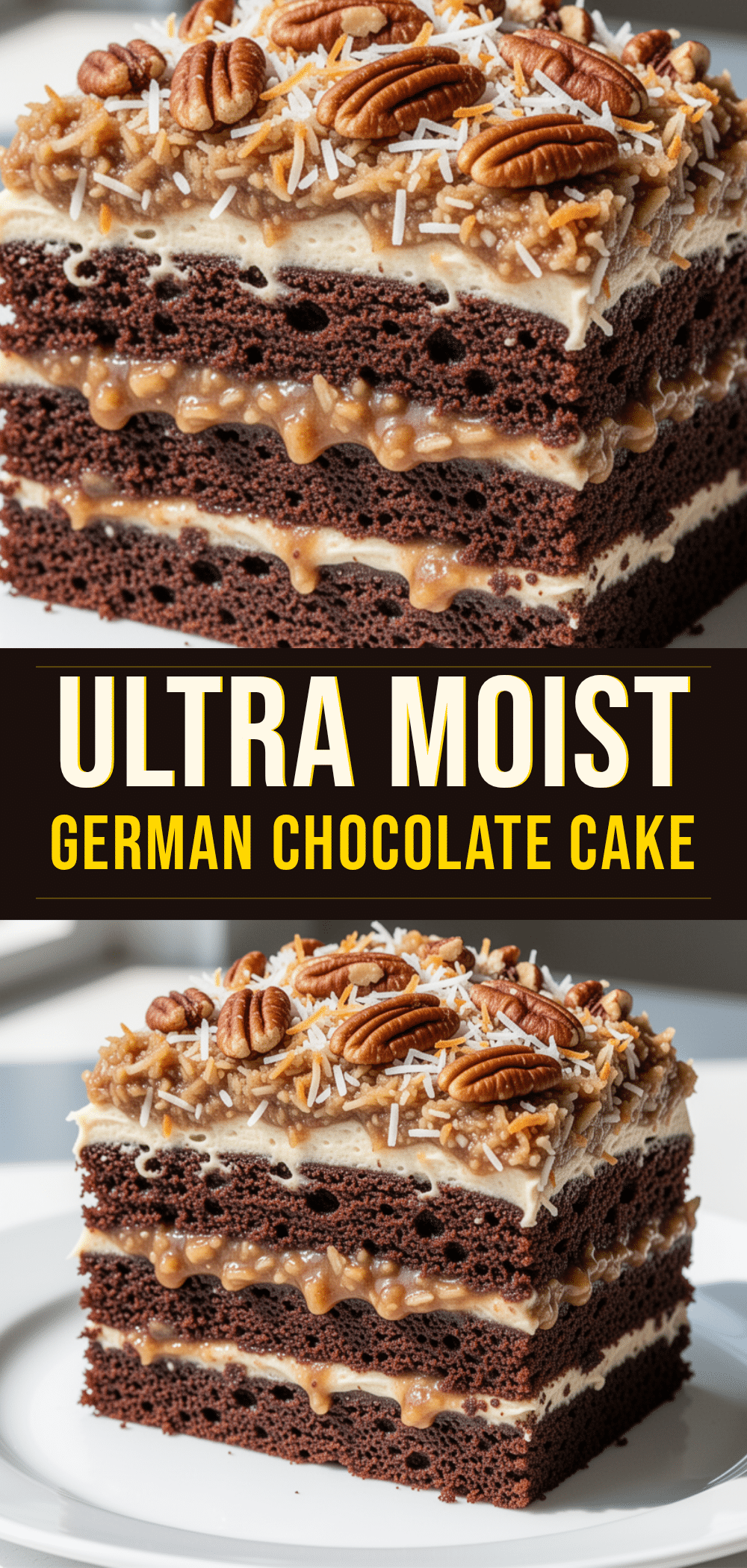
German Chocolate Cake: Best Ultra-Moist Recipe
- Total Time: 1 hour 5 minutes
- Yield: 12 servings 1x
Description
An ultra-moist German Chocolate Cake featuring a rich, custard-like coconut-pecan frosting. This classic dessert is easier to make than you think and stays moist for days thanks to the use of oil and buttermilk.
Ingredients
- 2 cups (250g) All-Purpose Flour
- 2 cups (400g) Sugar
- ¾ cup (75g) Unsweetened Cocoa Powder
- 1 tsp Baking Powder
- 1 tsp Baking Soda
- 1 tsp Salt
- 3 large Eggs (room temperature)
- 1 cup (240ml) Buttermilk
- ½ cup (120ml) Vegetable Oil
- 2 teaspoons Vanilla Extract
- 1 cup (240ml) Boiling Water
- 1 can (12 oz) Evaporated Milk
- 3 large Egg Yolks
- 1 ½ cups (300g) Sugar
- ½ cup (115g) Unsalted Butter
- 1 teaspoon Vanilla Extract
- 1 ½ cups Shredded Coconut (sweetened)
- 1 ½ cups Chopped Pecans (toasted)
Instructions
- Preheat oven to 350°F (175°C). Grease and flour two 9-inch round cake pans, or line bottoms with parchment paper.
- In a large bowl, whisk together flour, sugar, cocoa powder, baking powder, baking soda, and salt until no lumps remain.
- In a separate bowl, beat eggs lightly. Add buttermilk, vegetable oil, and vanilla extract; whisk until combined.
- Pour wet ingredients into dry ingredients and beat on medium speed for about 2 minutes until the batter is thick.
- Carefully stir in boiling water by hand. The batter will become thin; this is normal.
- Pour batter evenly into prepared pans.
- Bake for 30-35 minutes or until a wooden pick inserted in the center comes out clean.
- Cool cakes in pans for 10 minutes, then turn out onto a wire rack to cool completely.
- For the frosting, whisk evaporated milk, egg yolks, sugar, and butter in a medium saucepan.
- Cook over medium heat, stirring constantly, for 10-12 minutes until the mixture boils and thickens enough to coat the back of a spoon.
- Remove from heat and stir in vanilla, coconut, and pecans.
- Let frosting cool slightly until spreadable but still warm.
- Place one cake layer on a serving plate, spread a generous layer of frosting on top, and add the second layer.
- Frost the top and sides of the cake with remaining frosting.
- Refrigerate for at least 1 hour before serving to set the frosting.
- Let cake sit at room temperature for 15-20 minutes before serving.
Notes
Ensure eggs and buttermilk are at room temperature for best emulsion. Do not overmix the batter once flour is added to avoid a tough texture. Toast pecans for enhanced flavor. The cake can be made ahead; bake layers a day in advance and frost the next day for better flavor melding. Store at room temperature for up to 2 days or freeze unfrosted layers for up to 3 months.
- Prep Time: 30 minutes
- Cook Time: 35 minutes
- Category: Dessert
- Cuisine: American
Nutrition
- Serving Size: 1 slice
- Calories: 450
- Sugar: 40
- Sodium: 350
- Fat: 22
- Saturated Fat: 8
- Carbohydrates: 55
- Fiber: 2
- Protein: 6
Keywords: German Chocolate Cake, coconut pecan frosting, moist chocolate cake, homemade cake, birthday cake, classic dessert


